
The burden of hospital admission rates due to heart attacks in England rose between 2012 and 2016, despite decades of falling rates, new research suggests. The researchers also found that after 2010-2011, admission rates increased in most age groups. Young women aged 35 to 49 and even younger ... READ MORE
AI replaces contrast dye for fast, cheaper and needle-free cardiac MRI scans
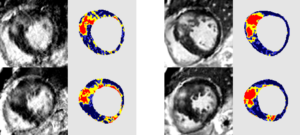
A team from Oxford comprising artificial intelligence (AI) scientists, magnetic resonance specialists and cardiologists have developed a new cardiac magnetic resonance (CMR) scan for detecting heart muscle disease. The current ‘gold standard’ for imaging heart muscle disease is CMR, using a ... READ MORE
New Senior Research Fellows named

The NIHR Oxford BRC has announced the appointment of its latest group of Senior Research Fellows – the third cohort of emerging research leaders to receive the accolade. Like in 2020, this year’s selection process was a coordinated effort by the Oxford BRC and its partners in the NIHR ... READ MORE
Study investigating targeted drug delivery by focused ultrasound for pancreatic cancer opens
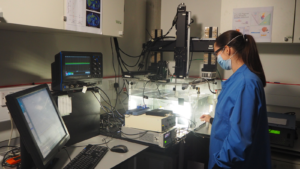
University of Oxford researchers have begun recruitment to a study looking at whether chemotherapy medication can reach pancreatic tumours more effectively if encapsulated within a heat-sensitive shell and triggered with focused ultrasound. The Phase I PanDox study, which is supported by the ... READ MORE
Delayed second dose and third doses of the Oxford vaccine lead to heightened immune response to COVID-19
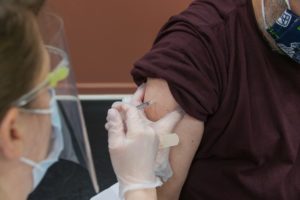
A longer delay of up to 45 weeks between the first and second dose of the Oxford-AstraZeneca vaccine leads to enhanced immune response after the second dose, the latest research by the Oxford Vaccine Group has found. They also found that a third dose given more than six months after the second ... READ MORE
Major grant to strengthen research and benefit patients

Oxford University Hospitals (OUH) has made a grant of £11.5 million to the University of Oxford, which the University will match with other funding, to allow the development of major clinical research facilities which have the potential to support the introduction of innovative and ground-breaking ... READ MORE
Latest data on immune response to COVID-19 reinforces need for vaccination

A new study led by University of Oxford has found that previous infection, whether it was symptomatic or asymptomatic, does not necessarily protect you long term from COVID-19, particularly against new variants of concern. The PITCH Study (Protective Immunity from T cells to COVID-19 in Health ... READ MORE
Impaired antibody response to COVID-19 vaccination in patients with myeloid blood cancers
Oxford researchers have found that antibody responses to the first doses of COVID-19 vaccine in people with chronic myeloid blood cancers are not as strong as those among the general population. While this is expected to improve with the second dose, this important finding may help influence ... READ MORE
Oxford wins government funding to evaluate prostate cancer detection system
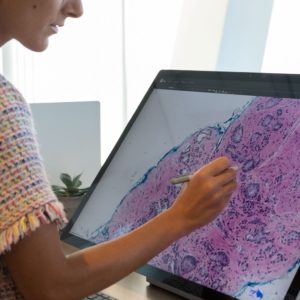
A prostate cancer detection software system to help pathologists quickly identify suspicious areas of tissue, developed by the digital diagnostic company Paige, will be investigated in a multicentre clinical study led by the University of Oxford as part of a successful NHSX Artificial Intelligence ... READ MORE
Treating needle fears may reduce COVID-19 vaccine hesitancy

A new large-scale study shows that a quarter of the UK adult population has a potential injection phobia, and these individuals are twice as likely to be put off getting a COVID-19 vaccine. The study indicates that if all injection anxiety in the population was removed, just over 10 per cent of ... READ MORE
RECOVERY Trial identifies another effective COVID-19 treatment

The RECOVERY Trial, the world’s largest randomised trial of potential COVID-19 treatments, has found that a monoclonal antibody combination developed by US company Regeneron reduces deaths for hospitalised COVID-19 patients who have not mounted their own immune response. The ... READ MORE
Professor Susan Jebb appointed as Chair of the Food Standards Agency

Professor Susan Jebb, the Oxford BRC’s Theme Lead for Obesity, Diet and Lifestyle, has been appointed as the new Chair of the Food Standards Agency. Prof Jebb, Professor of Diet and Population Health in Oxford University’s Nuffield Department of Primary Care Health Sciences, said: "I am ... READ MORE
BRC-supported researchers recognised in Queen’s Birthday Honours

A number of NIHR Oxford BRC-supported researchers who have played prominent roles in the global response to the COVID-19 pandemic have been honoured as part of the Queen’s Birthday Honours List. The researchers, who have developed new vaccines or identified new drug treatments, have saved many ... READ MORE
RECOVERY trial finds aspirin does not improve survival for hospitalised COVID-19 patients

The RECOVERY Trial, the world’s largest randomised trial of potential COVID-19 treatments, has found that in patients hospitalised with COVID-19, aspirin is not associated with reductions in mortality or in the risk of progressing to invasive mechanical ventilation or death. In ... READ MORE
AI endoscopy enables 3D surface measurements of pre-cancerous condition in oesophagus
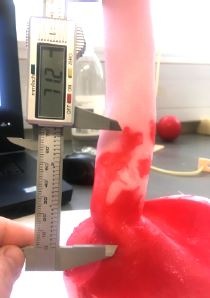
Clinicians and engineers in Oxford have begun using artificial intelligence alongside endoscopy to get more accurate readings of the pre-cancerous condition Barrett’s oesophagus and so determine patients most at risk of developing cancer. In a research paper published in the journal ... READ MORE
AI detects life-threatening blood vessel inflammation from COVID-19 variants
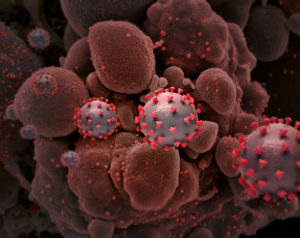
New artificial intelligence (AI) technology to scan for heightened blood vessel inflammation can calculate a person’s risk of death from COVID-19 and COVID-19 variants. The technology could be used to tailor their treatment and give them the best chance of recovery, according to new research ... READ MORE
Blog: Identifying policy implications of personal genetic health information

Oxford BRC researcher, Dr Liz Ormondroyd, explains how she has been working with fellow academics and the UK Parliamentary Office of Science and Technology to identify policy implications of genomic health information. Genetics and genomics are increasingly in the news. People can buy genetic ... READ MORE
Artificial intelligence tool for streamlining pathology workflow

A multidisciplinary team comprising University of Oxford academics and Oxford University Hospitals (OUH) pathologists has developed an algorithm that automates requests for additional investigation of diagnostically uncertain prostate biopsies. The team were supported by the NIHR Oxford BRC ... READ MORE
New trial PROMises hope for patients affected by myelofibrosis

A new clinical trial has been launched to offer a novel treatment option for patients with the blood cancer myelofibrosis (MF). The PROMise trial, launched by the Cure Leukaemia-funded Trials Acceleration Programme, will involve patients aged 16 or over at 15 NHS centres, including Oxford’s ... READ MORE
Study investigates whether digital technologies can help reduce loneliness

An Oxford BRC study has found that digital technology interventions are not effective for reducing loneliness in older adults. From 4939 screened articles, the authors reviewed six research papers on digital technology interventions for loneliness in a systematic review and meta-analysis ... READ MORE
- « Previous Page
- 1
- …
- 15
- 16
- 17
- 18
- 19
- …
- 48
- Next Page »