

A newly appointed professor at the University of Oxford’s Nuffield Department of Orthopaedics, Rheumatology and Musculoskeletal Sciences (NDORMS) will lead Oxford’s answer to the key global challenge of how to determine quickly which potential new therapies have the properties to become important ... READ MORE
News Archive
Schoolchildren and researchers gather to mark World Diabetes Day

Local schoolchildren joined University of Oxford researchers and diabetes patients to mark World Diabetes Day on Wednesday, but forming a blue circle around the famous Triton statue in the Radcliffe Observatory quarter. The awareness-raising event was organised by the NIHR Oxford Biomedical ... READ MORE
Oxford secures £17.5 million to lead national programmes in AI to improve healthcare
Medical research teams in Oxford will benefit from £17.5 million in new funding thanks to a government initiative to boost new artificial intelligence (AI) healthcare projects that benefit patients with a range of conditions. Funding will be provided to the University of Oxford through the ... READ MORE
New clinical tool will help patients with acute ankle sprain

Patients arriving at hospital emergency departments with acute ankle sprains can expect more timely advice and follow-up care in future after researchers in Oxford developed a new tool that will aid clinical decisions on treatment. Ankle sprains are very common and represent up to 5 per cent of ... READ MORE
Gestational diabetes app officially launched
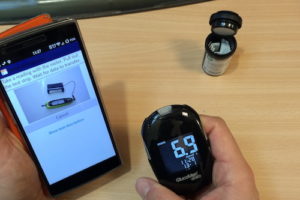
A smartphone application for women with gestational diabetes, developed with support from NIHR Oxford Biomedical Research Centre, has been launched commercially. GDm-Health has now completed its development following a two-year clinical evaluation in the NHS by over 1,000 women, and is currently ... READ MORE
Study reveals trends in incidence of spontaneous pneumothorax
Oxford researchers supported by the NIHR Oxford Biomedical Research Centre have published research that show how the rates of incidence and recurrence of spontaneous pneumothorax have changed over time. The research, published on 9 October in the Journal of the American Medical Association, ... READ MORE
Gene therapy breakthrough in treating rare form of blindness
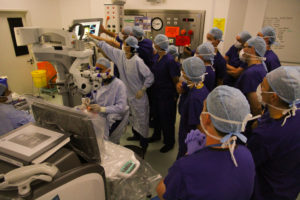
The world’s first gene therapy trial for a genetic cause of blindness known as choroideremia has shown positive results. The trial, supported by NIHR Oxford Biomedical Research Centre (BRC), began in 2011 at the Oxford Eye Hospital, part of the Oxford University Hospitals NHS Foundation ... READ MORE
Award-winning citizen science project tackling TB gets millionth classification

An award-winning Oxford-based international project to tackle antibiotic resistance has achieved its one millionth classification. BashTheBug is an initiative based in the University of Oxford’s Modernising Medical Microbiology Group at the John Radcliffe Hospital and supported by the National ... READ MORE
Oxford team use DNA sequencing and patient data to halt infection outbreak
Clinical and research teams at Oxford University Hospitals (OUH) NHS Foundation Trust, using infection prevention and control best practice, whole genome sequencing and electronic patient data, have halted an outbreak of a potentially deadly fungal pathogen after detecting that multi-use patient ... READ MORE
Smartphone insomnia treatment rolled out to NHS patients in South East

People across the South East of England are to be given access to a new digital treatment for insomnia as an alternative to sleeping pills. The Sleepio app, a digital cognitive behavioural therapy (CBT)-based programme that can be accessed via smartphone or the web, is to be made available later ... READ MORE
Event explores Healthcare Technologies of the Future

A one-day event in Oxford today is offering a unique opportunity to for healthcare industry figures from the US and Europe to engage with two of the world’s leading universities to explore the many ways healthcare will be transformed. The Healthcare Technologies of the Future Conference is being ... READ MORE
Referrals to total diet replacement programmes are effective for treating obesity

Replacing food with a diet of soups, shakes and bars starting at 810 calories per day alongside regular sessions with a counsellor is a safe and clinically effective way to treat obesity in primary care, a study by University of Oxford researchers has found. Total diet replacement programmes are ... READ MORE
UK-led study marks shift towards genetic era in tackling TB
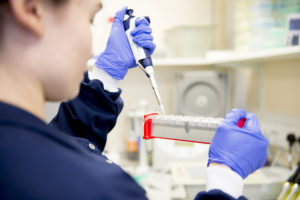
In a landmark study that may herald a quicker, more tailored treatment for the millions of people around the world living with tuberculosis (TB), UK researchers have shown how our understanding of TB’s genetic code is now so detailed that we can now predict which commonly used anti-TB drugs are best ... READ MORE
Research for better shared decision-making in knee surgery
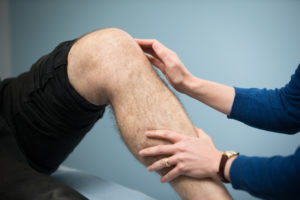
New research by a team at the University of Oxford, supported by the NIHR Oxford Biomedical Research Centre, provides a robust basis for informed shared decision-making and consent on keyhole knee surgery. An innovative study, published today in the Lancet, using 20 years’ worth of data covering ... READ MORE
Nitric Oxide conference gets under way in Oxford

Delegates from round the world have descended on Oxford for the 10th international conference of the Nitric Oxide Society, which has got under way. This year, the NIHR oxford Biomedical Research Centre is among the sponsors of the event. The conference, which is being held at the University of ... READ MORE
Research reveals link between high blood pressure and risk of aortic valve disease
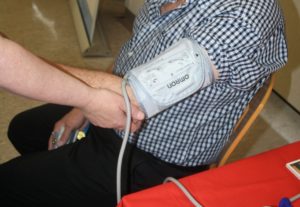
New research has found that long-term exposure to high blood pressure is associated with an increased risk of aortic valve disease, with significant implications for clinical practice guidelines and health management. The findings, published in the European Heart Journal, are from a study of 5.4 ... READ MORE
Change at the helm of Oxford Biomedical Research Centre

The leading academic who has overseen the expansion of world-leading medical research at the NIHR Oxford Biomedical Research Centre (BRC) for the past nine years is stepping down. Professor Keith Channon will be replaced as Director of the Oxford BRC by Professor Helen McShane, a leading vaccine ... READ MORE
Study shows new technology can predict fatal heart attacks
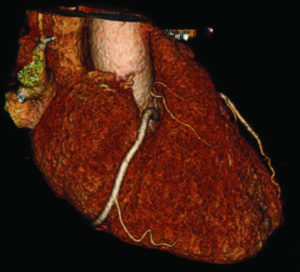
Researchers at the University of Oxford, supported by the NIHR Oxford Biomedical Research Centre (BRC), have developed a new technology based on analysis of computed tomography (CT) coronary angiograms that can identify patients at risk of deadly heart attacks years before they occur. Heart ... READ MORE
Lifestyle factors linked to brain health of young adults
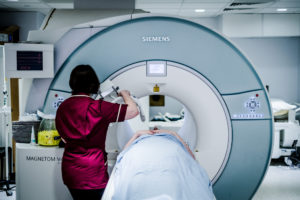
Researchers at Oxford’s John Radcliffe Hospital have used advanced magnetic resonance imaging (MRI) to investigate whether factors such as blood pressure, fitness, smoking and alcohol intake during young adult life are associated with changes in the blood vessels inside the brain. The University ... READ MORE
Study looks at why co-amoxiclav-resistant E coli infections are on the rise

A study looking at health records in Oxfordshire over nearly 20 years has suggested that measures to improve antibiotic use in GP surgeries might help to combat the spread of difficult-to-treat, antibiotic-resistant E coli infections. The study, published in the Lancet Infectious Diseases, found ... READ MORE
- « Previous Page
- 1
- …
- 29
- 30
- 31
- 32
- 33
- …
- 50
- Next Page »