
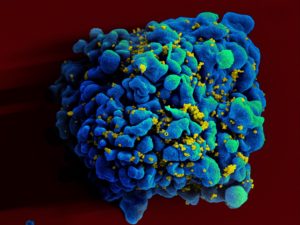
Results from a study testing a new ‘kick and kill’ method of reducing the size of the undetected HIV reservoir in people living with the virus were published in The Lancet this week. RIVER (Research in Viral Eradication of HIV Reservoirs) is the first ever randomised clinical trial to test this ... READ MORE
News Archive
Critical care nurse is first from OUH to get an NIHR clinical doctoral fellowship

A critical care research nurse based at the John Radcliffe Hospital has become the first Oxford University Hospitals nurse to receive funding for a PhD from the National Institute for Health Research (NIHR). Jody Ede, a sister in the Adult Intensive Care Unit and a researcher in the Kadoorie ... READ MORE
Link between high cholesterol and aortic valve disease risk found
Oxford researchers have found that while having high cholesterol levels does not influence a person’s risk of aortic or mitral regurgitation, it does increase their risk of developing another major heart valve disease - aortic stenosis. Aortic stenosis is the most common form of heart valve ... READ MORE
Exhibition on NHS research launched in Oxford

A photography exhibition showcasing ground-breaking NHS research taking place across the Thames Valley has been launched in Oxford. ‘The Body Unlocked: How Research is Changing Lives’ features life-sized photographs of people who have taken part in studies, researchers at work ... READ MORE
New trauma wound treatment no better than standard dressing

A study by Oxford researchers has shown that a new method of treating wounds after major trauma is no more effective at improving surgical infection rates than cheaper standard dressings. The findings, by a team at the Nuffield Department of Orthopaedics, Rheumatology, and Musculoskeletal ... READ MORE
Almost half of chronic kidney disease is unrecognised
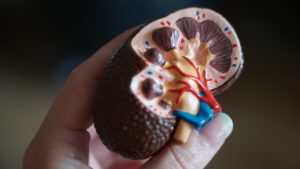
A study by Oxford researchers has found that more than 18 percent of over-60s have chronic kidney disease (CKD), around 44 percent of whom are undiagnosed without screening. CKD is a potentially serious condition, but is associated with few, if any, symptoms. It is thought to affect around 15 ... READ MORE
Short or long sleep associated with pulmonary fibrosis

Scientists have discovered that people who regularly sleep for very long (11 hours or more) or very short (four hours or less) periods of time are two to three times more likely to have the incurable disease pulmonary fibrosis, compared to those that sleep for seven hours in a day. The ... READ MORE
Oxford researchers test ‘Viagra’ drug to prevent recurrent strokes

University of Oxford researchers have begun a clinical trial to assess whether the drug sildenafil, more commonly known by its commercial name Viagra, could improve blood flow to the brain and so have the potential to reduce damage to small blood vessels in the brain and prevent ... READ MORE
Amount of sugar sold in soft drinks drops by 29% in the UK

There was a 29% reduction in the total amount of sugar sold in soft drinks in the UK between 2015-2018, despite an increase in sales of soft drinks by volume of 7%, according to new research supported by the NIHR Oxford BRC. The research, published in BMC Medicine, shows that individual soft ... READ MORE
Researchers identify link in the treatment of inflammatory bowel disease
A new study involving Oxford researchers has revealed how the anti-inflammatory cytokine IL-10 and lipid mediator prostaglandin E2 (PGE2) work together to prevent inflammatory tissue damage and maintain a healthy gut balance. Inflammatory bowel diseases (IBD), which include Crohn’s disease (CD) ... READ MORE
Successful Nepal study for typhoid vaccine developed in Oxford

A large field study in Nepal has shown that a typhoid conjugate vaccine (TCV) developed in Oxford is over 81 percent effective in tackling the disease. A single dose of the vaccine was found to be safe and effective in reducing typhoid in children aged 9 months to 16 years in an endemic ... READ MORE
Platelet rich plasma found to be of no benefit in treating torn Achilles tendon

New research from the University of Oxford has shown that platelet rich plasma (PRP) is not effective in treating acute Achilles tendon ruptures. The Achilles tendon is the most common tendon rupture treated in hospitals. Patients face long periods unable to work or participate in sport as ... READ MORE
All-singing all-dancing research at the Oxford Science and Ideas Festival

Oxford BRC-supported researchers have been sharing stories from their work through music and dance at IF Oxford, the Oxford Science and Ideas Festival. As part of the festival’s programme of over 100 events, the Oxford BRC supported a dance performance for primary school children and their ... READ MORE
Promising therapy for common form of eczema identified in early-stage trial
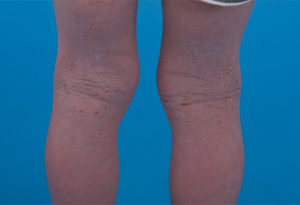
A new therapy that targets the immune system has shown promise for treating atopic dermatitis, the most common form of eczema, in a trial led by University of Oxford scientists. The small initial study, published in the journal Science Translational Medicine, is the first trial in humans to ... READ MORE
Severe reactions to grief can be predicted and treated in the first months following a bereavement

Memory, coping strategies and resilience immediately following a loss have been shown to predict the path of a bereaved person’s grief according to new research. The study, published in the Journal of Consulting and Clinical Psychology, also suggested that clinical intervention in the ... READ MORE
Study lays groundwork for review of digital interventions to tackle loneliness
Researchers at the NIHR Oxford Biomedical Research Centre (BRC) have produced a protocol to carry out a review and meta-analysis of the various digital technology interventions to address the growing problem of loneliness. “Loneliness is an emerging public health problem, associated with social, ... READ MORE
Study probes effectiveness of efforts to involve patients and public in changing research agenda

Projects that involve patients and the public as a way of determining health research priorities vary considerably in the extent to which they influence what research is actually done, according to research supported by the NIHR Oxford Biomedical Research Centre. The research aimed to assess ... READ MORE
Researchers find new cells that repair tissue
Researchers at Oxford University have discovered that a newly discovered group of cells can help repair tissues in the body. The researchers, who are supported by the NIHR Oxford Biomedical Research Centre, say these cells, which are abundant in our bodies, could be harnessed to help heal ... READ MORE
Oxford haematologists win national awards to further their research
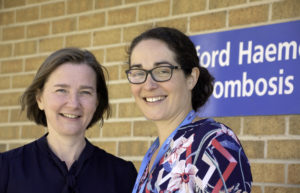
Two consultant haematologists at the Oxford Haemophilia and Thrombosis Centre (OHTC), based at the Churchill Hospital, have been awarded funding for their research as part of a new national scheme. Dr Nicola Curry and Dr Susie Shapiro were among the recipients of the new Clinical Academic ... READ MORE
Heart rate rise and blood pressure drops during pregnancy not as dramatic as previously thought

New analysis from over 36,000 healthy women in 20 countries suggests that physiological changes during pregnancy may not be as dramatic as traditionally taught. However, blood pressures do appear to be increasing year on year. Medical text books are based on data that is now over 40 years old. ... READ MORE
- « Previous Page
- 1
- …
- 24
- 25
- 26
- 27
- 28
- …
- 49
- Next Page »