Oxford BRC-supported researchers have provided new evidence that might explain why the prognosis of heart failure patients has improved so little over the past decade. Findings show that a decline in cardiovascular deaths has been offset by an increase in the number of deaths from infections and ... READ MORE
News
Future life sciences leaders immerse themselves in Oxford collaborations

A group of emerging health sector leaders taking part in a new national leadership programme have visited Oxford to learn about how academics, clinicians and industry partners are collaborating to drive innovation to benefit patients. The Immersion Day, which was organised by the NIHR Oxford ... READ MORE
Achieving Type 2 diabetes treatment targets would improve health and reduce healthcare costs

Improvements in health and reductions in healthcare costs could be achieved if blood glucose, blood pressure and cholesterol treatment targets were met. Researchers from the Nuffield Department of Population Health, University of Oxford, assessed the long-term impact of achieving treatment ... READ MORE
International students learn about Oxford’s neuroscience and diabetes research

Around 50 international students interested in a career in medicine or science have visited Oxford BRC-funded research facilities. Half the students, who are taking part in the London International Youth Science Forum (LIYSF), visited the John Radcliffe Hospital’s Neuroscience department, while ... READ MORE
Smartphone test predicts how symptoms develop in Parkinson’s

Researchers in Oxford have found that a simple test carried out on a smartphone can help to accurately predict future change in people in the early stages of Parkinson’s, helping to determine the support they may need. This study, supported by the NIHR Oxford Biomedical Research Centre (BRC) ... READ MORE
New approach to reducing damage after a heart attack
During the emergency procedure used to reopen the blocked artery that has caused a heart attack, smaller ‘micro’ blood vessels can remain constricted, causing significant damage, according to a new study. The research by Associate Professor Neil Herring of the University of Oxford’s Department of ... READ MORE
Study discovers genetic changes linked to leukaemia in children with Down’s syndrome
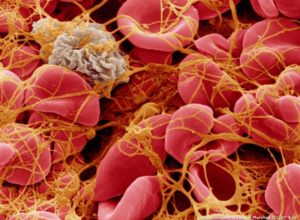
Researchers at the University of Oxford have discovered the specific gene mutations that are required for the development of leukaemia in children with Down’s syndrome. Children with Down’s syndrome have a 150-fold increased risk of myeloid leukaemia, and while some of the genetic causes of ... READ MORE
Research suggests high blood pressure is major cause of heart valve disease

New research has conclusively found that long-term exposure to high blood pressure increases the risk of heart valve disease, with significant implications for clinical practice guidelines and health management. “Clinical practice guidelines currently make little reference to preventative ... READ MORE
Oxford Blood Group: Exchange Newsletter Issue 3 vol 1 / June 2019
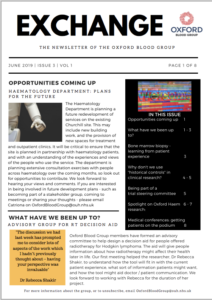
... READ MORE
Doctors should offer structured weight loss programmes as treatment for non-alcoholic fatty liver disease

Doctors should offer structured weight loss programmes to patients with non-alcoholic fatty liver disease (NAFLD), new research led by the University of Oxford has found. The study, published in JAMA Internal Medicine, found that weight loss programmes improved measures of liver disease in ... READ MORE
- « Previous Page
- 1
- …
- 49
- 50
- 51
- 52
- 53
- …
- 95
- Next Page »