
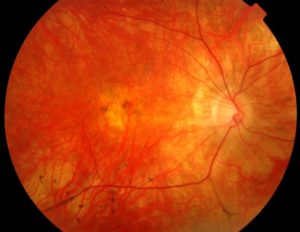
The results of a first-in-human clinical trial of gene therapy to treat a common cause of genetic blindness have shown partial reversal of sight loss in some patients. X-linked retinitis pigmentosa, caused by mutations in RPGR gene, is the most common cause of blindness in young people. The ... READ MORE
News for Surgical Innovation, Technology and Evaluation
Oxford professors appointed NIHR Senior Investigators

Four leading healthcare academics in Oxford have received a prestigious national award. The University of Oxford professors were named National Institute of Health Research (NIHR) Senior Investigators in recognition of being “among the most prominent and prestigious researchers ... READ MORE
World’s first gene therapy operation for common cause of sight loss carried out
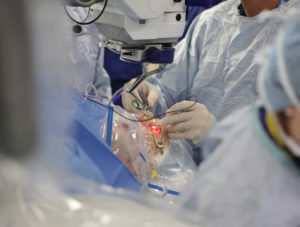
Researchers in Oxford have carried out the world’s first gene therapy operation to tackle the root cause of age-related macular degeneration (AMD), the UK’s most common cause of sight loss. The procedure was carried out at the John Radcliffe Hospital by Prof Robert MacLaren, Professor of ... READ MORE
First human test of robotic eye surgery a success
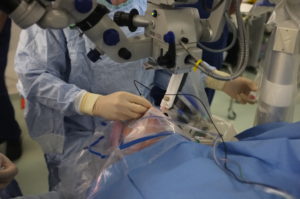
The first trial of robot-assisted eye surgery in patients has shown the technique to be both safe and effective. Researchers from the University of Oxford, supported by the National Institute for Health Research (NIHR) Oxford Biomedical Research Centre (BRC) have completed the first successful ... READ MORE
Oxford medical researchers win prestigious national awards
Leading health researchers in Oxford have been recognised in a prestigious national competition. Eight professors have been named National Institute of Health Research (NIHR) Senior Investigators in recognition of their “outstanding contribution to clinical and applied health and social care ... READ MORE
Second key step for eye robot trial
A robot has been used to inject a drug into the back of the eye in a world first for the next phase of a landmark clinical trial at Oxford’s John Radcliffe Hospital. Prof Robert MacLaren used the remotely controlled robot to administer a tiny volume of blood dissolving agent tPA under the retina ... READ MORE
World first for robot eye operation
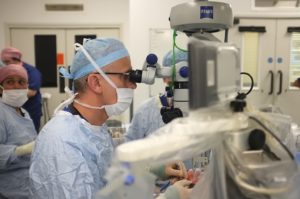
Surgeons at Oxford’s John Radcliffe Hospital have performed the world’s first operation inside the eye using a robot. Robert MacLaren, Professor of Ophthalmology assisted by Dr Thomas Edwards, Nuffield Medical Fellow, used the remotely controlled robot to lift a membrane 100th of a millimetre ... READ MORE
“Bionic eye” to feature on ITV documentary

The story of a patient who was among the first in the UK to receive the world's most advanced 'bionic eye' is to feature on ITV this month. Nikki Watson’s story will feature on “What Would Be Your Miracle?” on ITV 1 on Thursday, May 12 at 9pm. The 48-year-old, from Devon, was diagnosed with ... READ MORE
Gene therapy shows long-term benefit for treating rare blindness
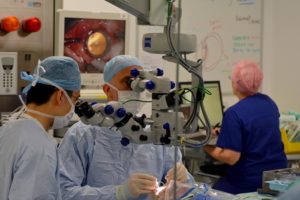
Pioneering gene therapy has restored some vision to patients with a rare form of genetic blindness for as long as four years, raising hopes it could be used to cure common causes of vision loss, new University of Oxford research published today shows. A technique which involves injecting a virus ... READ MORE
Blind woman’s joy as she reads the time thanks to “bionic eye”

A patient who is the first in the UK to receive the world’s most advanced “bionic eye” has been able to read the time for the first time in more than five years. The moment Rhian Lewis, 49, realised she had correctly told the time is captured on BBC’s “Trust Me I’m A Doctor”, to be broadcast on ... READ MORE
Bionic eyes give us a look into future of medical technology
BIONIC eyes, lung imaging and pregnancy apps were part of an exhibition revealing life-changing research taking place in Oxford. Members of the public had a rare opportunity to meet surgeons, nurses and clinical researchers who are building the next generation of clinical techniques to ... READ MORE
Surgery offers better survival rates for most men with localised prostate cancer
Surgical treatment offers better survival rates than radiotherapy for most men with clinically localised prostate cancer, according to one of the largest studies of its type. Researchers in Oxford, Stockholm, and the Netherlands compared data from more than 34,000 patients in Sweden over a 15-year ... READ MORE
Device keeps human liver alive outside body
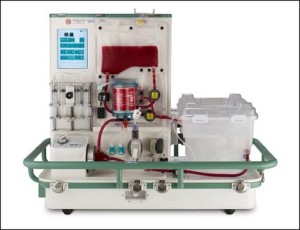
World first: human liver kept alive and functioning on machine outside patient’s body World first: livers kept alive on device successfully transplanted into two patients Oxford University machine could as much as double number of livers for transplant Technology currently being trialled for ... READ MORE
Royal visit to Oxford’s Churchill Hospital
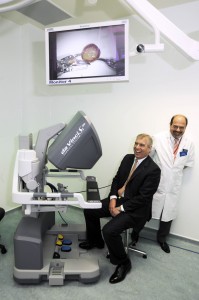
The Duke of York visited the Churchill Hospital in Oxford today to mark the opening of the new building. The building, that includes an integrated Cancer and Haematology Centre, provides a base for many NIHR Oxford Biomedical Research Centre projects. Chairman of Oxford University Hospitals ... READ MORE
Gene therapy trial begins for blindness caused by choroideraemia
Professor Robert MacLaren from the University of Oxford and Professor Miguel Seabra from Imperial College London are undertaking a clinical trial using gene therapy to treat a disease that causes blindness known as choroideraemia. This condition is currently incurable and affects thousands of people ... READ MORE
First electronic retina implanted in the UK
Surgeons in Oxford are the first in the UK to successfully implant an electronic retina into the back of an eye. On 22 March 2012, Chris James became the first patient in the UK to receive this ground-breaking surgery as part of a clinical trial being carried out at John Radcliffe Hospital and ... READ MORE
Man treated in Oxford for blindness with gene therapy
Researchers in Oxford have treated a man with an advanced gene therapy technique to prevent him from losing his sight. It is the first time that anyone has tried to correct a genetic defect in the light-sensing cells that line the back of the eye. The president of the Academy of Medical ... READ MORE
New retinal implant technique is being trialled in Oxford
A new retinal implant technique is being trialled at the Oxford Eye Hospital in 2011 for the first time in the UK. Professor Robert MacLaren, Consultant Retinal Surgeon at the Oxford Eye Hospital, is leading a trial to look at new technology that aims to restore sight to blind patients. By ... READ MORE
Oxfordshire patients to benefit from robotic surgery
The University of Oxford and the Oxford Radcliffe Hospitals NHS Trust have acquired the latest technology in robotic surgery, the only one of its kind in the UK. The new £2 million instrument in the recently opened Oxford Cancer Centre will benefit patients undergoing keyhole surgery to remove ... READ MORE