
Social care following hip fractures costs more than £15,000 per patient every year, according to a new study by Oxford researchers. This amounts to a total cost of £1.25 billion per year. Hip fracture is the most common serious injury in older adults, affecting over 80,000 people in the UK ... READ MORE
News for Musculoskeletal
Drugs identified that could help prevent delirium after surgery

A new study has found that several commonly used drugs could significantly reduce the risk of delirium in older people following surgery. Delirium – a sudden state of confusion and memory problems – affects around one in seven older adults after an operation. People who get delirium spend ... READ MORE
New Kadoorie Institute for Trauma, Emergency and Critical Care established

Oxford Trauma and Emergency Care at the Nuffield Department of Orthopaedics, Rheumatology and Musculoskeletal Sciences (NDORMS), along with the Critical Care Research Team at the Nuffield Department of Clinical Neurosciences (NDCN) have formally become a new institute within the University of ... READ MORE
Surgery unnecessary for elbow fractures in children, new study finds

Researchers in Oxford and Liverpool have found that surgery for a common elbow fracture in children offers no clinical benefit compared to non-surgical care. The findings could have significant implications for treatment and offer significant cost savings to the NHS. Published in The Lancet, ... READ MORE
Study finds no increased safety risk for obese patients undergoing shoulder replacement surgery
Higher Body Mass Index (BMI) is not linked to increased risk of death or other complications following shoulder replacement surgery, according to a new study by University of Oxford researchers. Joint replacement surgeries - including hip, knee and shoulder replacements - can significantly ... READ MORE
World’s largest hip fracture research platform launched to improve care and outcomes
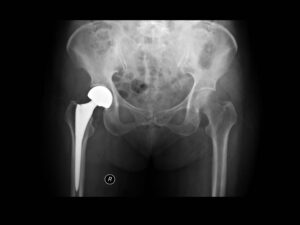
Taking an innovative approach to clinical research in hip fracture, the World Hip Trauma Evaluation (WHiTE) Platform Trial has been launched to test multiple new treatments for patients with fractures of the hip. Hip fractures are a major global health challenge, with 1.3 million cases per year ... READ MORE
New research highlights colorectal cancer trends and survival rates
A study has shed light on the incidence and survival rates of colorectal cancer (CRC) in the UK, offering healthcare decision-makers crucial insights for planning, management and screening for the disease. The study, published in the American Journal of Gastroenterology, involved researchers from ... READ MORE
Machine learning outperforms surgeons in predicting knee replacement outcomes
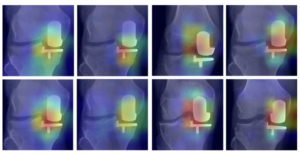
A new study has revealed that machine learning models can significantly outperform experienced surgeons in predicting patient outcomes after partial knee replacement. Unicompartmental (partial) knee replacement (UKR) is a common procedure designed to relieve pain in patients with knee ... READ MORE
Prediction model could help inform patients of shoulder replacement surgery risks
A new model to predict the risk of serious complications after shoulder replacement surgery has been developed in a collaboration between researchers from Oxford, Bristol and Copenhagen. The model could be an important tool to help patients and doctors make more informed decisions about this common ... READ MORE
Study sheds light on debate around shoulder replacement surgery for osteoarthritis
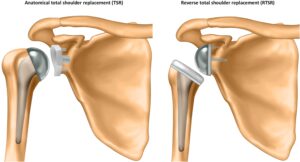
A new study has provided valuable insights into the ongoing debate surrounding two types of shoulder replacement surgery as a treatment for patients with osteoarthritis: reverse total shoulder replacement and anatomical total shoulder replacement. The study, published in the BMJ and funded by ... READ MORE
NHS baby check may miss dislocated hips in new-born babies

A new study has identified that NHS infant checks can miss serious hip abnormalities in new-born babies. Left undetected, these can require complex surgery, and lead to early arthritis. The study, published by the JAMA Network, was led by researchers at the University of Liverpool in ... READ MORE
New study reveals long-term mental health risks after COVID-19

A new study has shed light on the long-term mental health consequences of COVID-19 infection and the growing evidence of the protective effect of vaccination on reducing the risk. The research, supported by the NIHR Oxford Biomedical Research Centre (BRC), was conducted in a population-based ... READ MORE
COVID jab linked to lower risk of COVID-19-related clot and heart complications
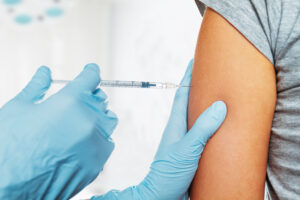
The risk of cardiac and clot-related complications following COVID-19 is substantially reduced in people who receive the COVID-19 vaccination, compared with unvaccinated individuals, according to new research. The observational study, which was supported by the NIHR Oxford Biomedical Research ... READ MORE
Frozen shoulder holds key to understanding fibrosis resolution

Oxford researchers have identified how cells work to resolve frozen shoulder, opening up potential new targets for treatment and reducing the need for surgery. Frozen shoulder is a painful and disabling condition affecting the ligaments that form the shoulder joint capsule. Patients experience ... READ MORE
COVID-19 vaccines found effective in reducing long COVID symptoms
A research team at the University of Oxford has found that vaccination against COVID-19 consistently reduced the risk of long COVID symptoms. While vaccines have proved effective in preventing severe COVID-19, their ability to prevent long-term symptoms has not yet been fully ... READ MORE
Study reveals inequalities in access to shoulder replacement surgery
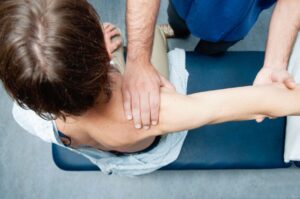
As demand for shoulder replacement surgery grows, a new study finds that up to one in six patients are having to travel to a different region for surgery, and exposes a year-on-year increase in the risk of serious adverse events after surgery that require admission to hospital. Shoulder pain ... READ MORE
New antibiotic bone cement found not to reduce infection after hip fracture surgery
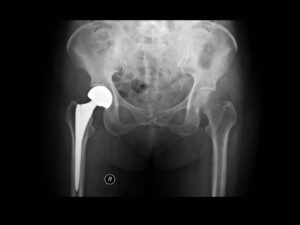
A large study has found that using high-dose dual-antibiotic loaded cement is unlikely to reduce the risk of infection in people who have had hip replacement surgery for their hip fracture. Bone cement is commonly used to fix surgical implants to the patient’s bone during hip replacement. In ... READ MORE
Shoulder replacement patients fare better with surgeons who do more operations
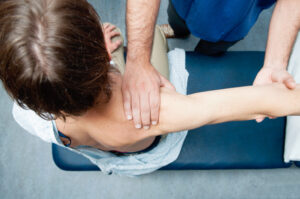
Patients treated by surgeons who average more than 10 shoulder replacements a year have a lower risk of further operations and serious complications, and a shorter hospital stay than those treated by surgeons who do fewer operations, according to a study by Oxford researchers. These findings, ... READ MORE
New approach to nail bed injury surgery could cut NHS costs
A new Oxford study, supported by the NIHR Oxford Biomedical Research Centre, shows that changing clinical practice for finger injuries in children could save the NHS £720,000 per year. Nail bed injuries in children are very common. They are generally caused by a child crushing their fingertip in ... READ MORE
£1.2m award to improve diagnosis of emergency spinal condition

The National Institute for Health and Care Research has awarded an Advanced Fellowship to Oxford University Hospitals (OUH) emergency medicine doctor David Metcalfe to study the diagnosis of the spinal condition cauda equina syndrome. Cauda equina syndrome is caused when the nerves at the end of ... READ MORE