

New research shows that routinely collected social care records can help predict which people will need hospital admission or who may die in the next one to three years. The findings suggest there is great potential in linking health and social care information to support more proactive, ... READ MORE
Impact News: Analogue to Digital
How body fat is stored across organs may reveal hidden health risks, study suggests

University of Oxford researchers have found that how fat accumulates in the body is just as important for identifying different health risks as a person’s overall weight. They say their findings suggest that looking at how fat is distributed across the whole body, including in and around multiple ... READ MORE
Oxford researchers win prestigious national leadership prizes

A leading Oxford orthopaedic trauma surgeon and a researcher specialising in the use of artificial intelligence (AI) in healthcare have been recognised with prestigious national research leadership prizes in recognition of their outstanding contribution to health and care research. Professor of ... READ MORE
AI tool reveals hidden organ damage caused by high blood pressure

Researchers at the University of Oxford have developed an artificial intelligence (AI) tool that may help doctors better understand how high blood pressure damages different organs in different people - potentially paving the way for more personalised treatment in future. The ... READ MORE
Trial of non-invasive scan marks possible breakthrough for endometriosis diagnosis

Researchers from the University of Oxford say an experimental imaging agent they have tested may help to locate endometriosis lesions that standard scans can miss and could represent a non-invasive tool for diagnosing and monitoring the condition, which could benefit millions of women across the ... READ MORE
New AI tool can predict heart failure at least five years before it develops
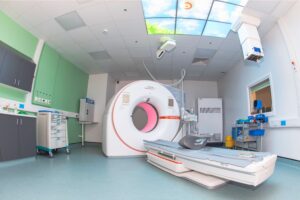
A pioneering artificial intelligence (AI) tool can predict a person's chance of developing heart failure at least five years before the debilitating condition develops, according to new research supported by the NIHR Biomedical Research Centre: Oxford and the BHF. The research team from the ... READ MORE
Workshop explores how to translate remote monitoring into clinical practice

Researchers from several NIHR Oxford Biomedical Research Centre (BRC) themes came together to discuss how they are using wearable technologies in their research and what need to happen to allow this remote monitoring to be implemented in everyday clinical practice. Among the aims of the ... READ MORE
Study tests whether deep brain stimulation can treat chronic pain
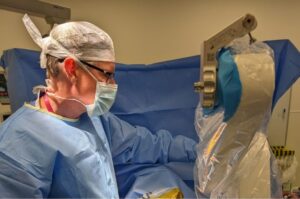
The first three patients have undergone revolutionary brain surgery in a bid to treat the chronic pain they have experienced since suffering a stroke. A research study by Oxford neurosurgeons and engineers is trialling whether deep brain stimulation (DBS) – delivering an electrical pulse into ... READ MORE
World’s largest hip fracture research platform launched to improve care and outcomes

Taking an innovative approach to clinical research in hip fracture, the World Hip Trauma Evaluation (WHiTE) Platform Trial has been launched to test multiple new treatments for patients with fractures of the hip. Hip fractures are a major global health challenge, with 1.3 million cases per year ... READ MORE
Oxford researchers pioneer new breathing test to detect lung disease earlier
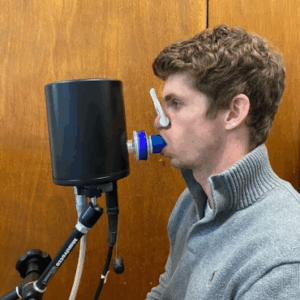
A new project led by the University of Oxford aims to develop a novel breathing test that could detect asthma and COPD earlier, more accurately, and closer to home, reducing pressure on the NHS and improving outcomes for patients. This work is included in a portfolio of research funded by the ... READ MORE
Levelling the medical devices playing field for all pregnant women

How can bias in the medical devices used during pregnancy and the neonatal period affect health outcomes, especially for minority ethnic and socio-economically disadvantaged groups? An Oxford University project, supported by the NIHR Oxford Biomedical Research Centre (BRC), is aiming to use the ... READ MORE
Home-based heart rhythm screening improves diagnosis of common heart condition

A wearable electrocardiogram (ECG) patch increases diagnosis of a common heart rhythm disorder, according to a study led by researchers at Oxford Population Health. The results of the Active Monitoring for Atrial Fibrillation (AMALFI) trial are published in JAMA (The Journal of the American Medical ... READ MORE
Wearable devices can help predict five-year risk of falls for people with Parkinson’s

University of Oxford researchers have demonstrated how clinicians could use data to predict the risk of falls in people with Parkinson’s disease (PD) to help improve effective longer-term care planning. Falls are a common problem for people living with Parkinson’s. A recent review estimated ... READ MORE