
Researchers from several NIHR Oxford Biomedical Research Centre (BRC) themes came together to discuss how they are using wearable technologies in their research and what need to happen to allow this remote monitoring to be implemented in everyday clinical practice.
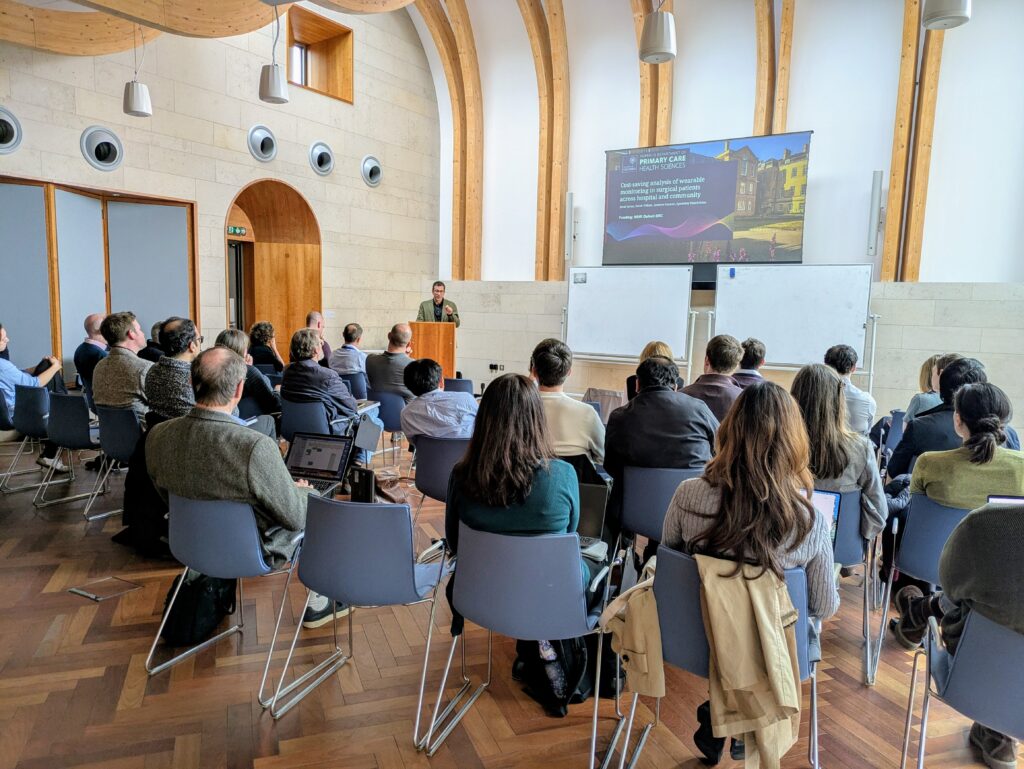
Among the aims of the workshop, held on 27 March at Exeter College’s Cohen Quadrangle, were to consider how to develop a cross-BRC platform to support the sharing of knowledge and best practice about wearables and to identify which are the most promising clinical pathways to adopt this technology, not least through a health economics lens.
Remote monitoring devices detect physiological signals and provide data on health metrics such as heart rate, blood pressure, glucose levels, blood oxygen saturation or sleep patterns. They can provide real-time insights for clinicians to inform early diagnoses, track chronic conditions or sudden deteriorations.
They promise to be a useful tool in helping clinical teams to meet the aims of the new NHS plan, not least the imperative to move care from hospital to the community, from analogue to digital and to prioritise prevention.
Dr Sarah Vollam, who leads a sub-theme in the Oxford BRC’s Digital Health from Hospital to Home theme, organised the workshop.
She said: “This event is a recognition that many different BRC themes are using wearables in their research. We are looking at how we can bring all that work together and collaborate more effectively, so that we are not duplicating our efforts. As we approach the bid for the next round of NIHR funding, we want to develop a clear mission statement and leadership around how we share our knowledge and work towards a more joined-up approach to using remote monitoring across BRC research.
“In particular, we are thinking about how wearable use can improving clinical care. Lots of research is using wearables as a data collection tool, but we want to explore how we harness it to improve day-to-day patient care, whether in intensive care, the patient’s own home or in social care, and to deliver cost savings to the NHS.”
Those attending heard short talks on how wearables have been used in hospital critical care, Hospital at Home services, in investigating infectious diseases, in social care settings and large epidemiological studies; they heard about the health economics implications of moving to remote technology and the perspective of industry.
Collaborators from other universities were at the workshop and the Oxford BRC Digital Health theme has already spoken to other NIHR BRCs about working together in this area.
Professor Andrew Farmer, who leads the Oxford BRC’s Digital Health from Hospital to Home Theme, said: “It was heartening to see the enthusiasm in the room for exploring the potential of this monitoring technology. We heard from people in a number of our BRC themes who are using wearables in different innovative ways.
“There’s an opportunity here for a coherent pitch to translate all these novel monitoring approaches into clinical pathways with the idea of transforming clinical care – whether it’s high acuity care around infection, or the direction of trends in long-term conditions that could enable proactive care to avoid unnecessary deterioration. We need these convincing real-life use cases that will persuade regulators, the NHS and industry to invest in what we’re doing.”
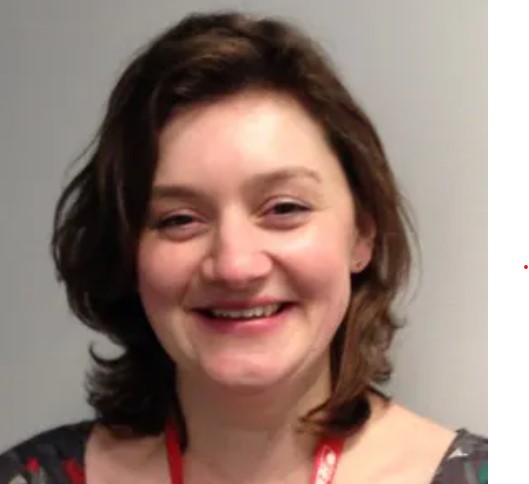
Dr Vollam was involved in the development of the virtual High Dependency Unit, a hospital ward in which high-risk patients are monitored using wearable sensors linked to tablet computers. This vHDU came into its own during the COVID-19 pandemic, when nurses could still perform vital-sign observations remotely while the high-risk patients remained isolated.
Now she is leading the PROSPECT study, which is using wearable monitoring and machine learning to improve the detection of deterioration following critical illness both in hospital and at home.
“With remote monitoring, there’s an opportunity to support patients into the community earlier, but also to improve their health. With the PROSPECT study, we’re looking to identify and predict deterioration earlier, which we will catch earlier, meaning more patients will be able to stay at home, without having to come into hospital, and so reduce the high readmission rates to hospital after discharge from ICU,” Dr Vollam said.