
Researchers in Oxford and Liverpool have found that surgery for a common elbow fracture in children offers no clinical benefit compared to non-surgical care. The findings could have significant implications for treatment and offer significant cost savings to the NHS.
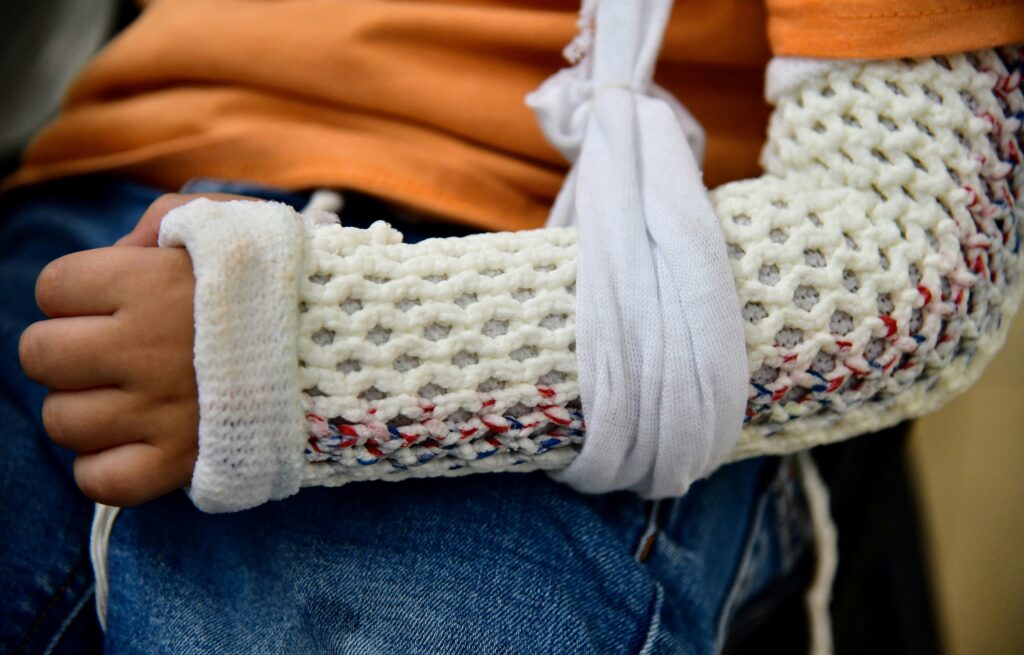
Published in The Lancet, the SCIENCE (Surgery or Cast for Injuries of the Epicondyle in Children’s Elbows) study is the largest multi-centre, randomised controlled trial of its kind. It was funded by the National Institute for Health and Care Research (NIHR) and supported by the NIHR Oxford Biomedical Research Centre (BRC).
The SCIENCE trial provides evidence on the treatment of children with displaced medial epicondyle fractures of the elbow, which occurs when a small piece of bone breaks off on the inside of the elbow, often because the strong muscles and tendons that attach there pull it away.
This type of fracture accounts for about 10% of paediatric elbow injuries, typically affecting children aged 10–12 years, usually after a fall while playing sport.
Despite being a common injury, there is worldwide debate about whether to use surgery to fix the bone, or to use a cast or splint to allow it to heal naturally.
Dan Perry, NIHR Research Professor in Children’s Orthopaedics & Trauma Surgery at the University of Liverpool and Alder Hey Hospital, said: “This is the first ever big clinical trial in children’s orthopaedic surgery, so treatment decisions for this type of injury – and most children’s injuries – have never been made based on robust scientific evidence.
“There’s been an increasing trend towards surgical fixation of broken bones in children, despite little supporting evidence. We set up the SCIENCE study to find out which treatment works best – whether having surgery was better than resting the arm in a plaster cast.”
The SCIENCE study included 334 children aged from seven to 15 years from hospitals across the UK, Australia, and New Zealand, all of whom had a displaced medial epicondyle fracture. Participants were randomised so that half were treated with a cast for four weeks, while the other half had surgery to fix the bone.
The primary outcome measure was upper limb function after 12 months, measured using the PROMIS Upper Extremity (UE) Score for Children. Children and parents were also asked to report on function, pain, complications, return to school, school absence and health-related quality of life. The researchers also looked at the cost to families and to the NHS.
The trial found that a healing naturally in a plaster cast was as good as surgery, whilst avoiding all the complications of having an operation.
Before the study started, families indicated that pain and getting back to normal function were the most important considerations for them. Children whose arm healed naturally in a cast got better just as quickly as those who had surgery, and both groups returned to their sports and music hobbies at the same time. They also had similar levels of pain and number of hospital visits – though those who did not have surgery had slightly less time off school.
One in seven children who had surgery needed a second operation, usually to remove the screw that was holding the broken bone in place. In contrast, one in 45 children treated with a cast needed an operation later to help the bone heal. Matt Costa, Professor of Trauma Surgery and trial lead at the University of Oxford’s Nuffield Department of Orthopaedics, Rheumatology and Musculoskeletal Sciences, said: “The study provides clear evidence that surgery should no longer be considered for displaced medial epicondyle fractures in children. This evidence will save children from unnecessary operations and save money for the NHS.”