
NIHR Biomedical Research Centre: Oxford

Enabling translational research through partnership

NIHR 20th Anniversary NIHR website
NIHR Biomedical Research Centre: Oxford
  • Home
  • About
    • About us
    • Impact
    • Our next BRC
    • Steering Committee
    • Promoting equality, diversity and inclusion in research
    • Current Vacancies
    • Stay in Touch
    • Contact Us
  • Research
    • Research Overview
      • NIHR Clinical Research Facility
      • Ethics in the NIHR BRC: Oxford
      • Health Economics
      • Medical Statistics
    • Cancer
    • Cardiovascular Medicine
    • Digital Health from Hospital to Home
    • Gene and Cell Therapy
    • Genomic Medicine
    • Imaging
    • Inflammation across Tissues
    • Life-saving Vaccines
    • Metabolic Experimental Medicine
    • Modernising Medical Microbiology and Big Infection Diagnostics
      • Theme overview
      • Infections in Oxfordshire Database (IORD)
    • Musculoskeletal
    • Preventive Neurology
    • Respiratory Medicine
    • Surgical Innovation, Technology and Evaluation
    • Translational Data Science
  • Patient & Public Involvement
    • For patients and the public
    • For researchers
    • More information
  • Training
  • Industry & Partnerships
  • News
  • Events
  • Videos

Research Theme

Sub-theme 1: Outbreak pathogens

Led by Professor Teresa Lambe
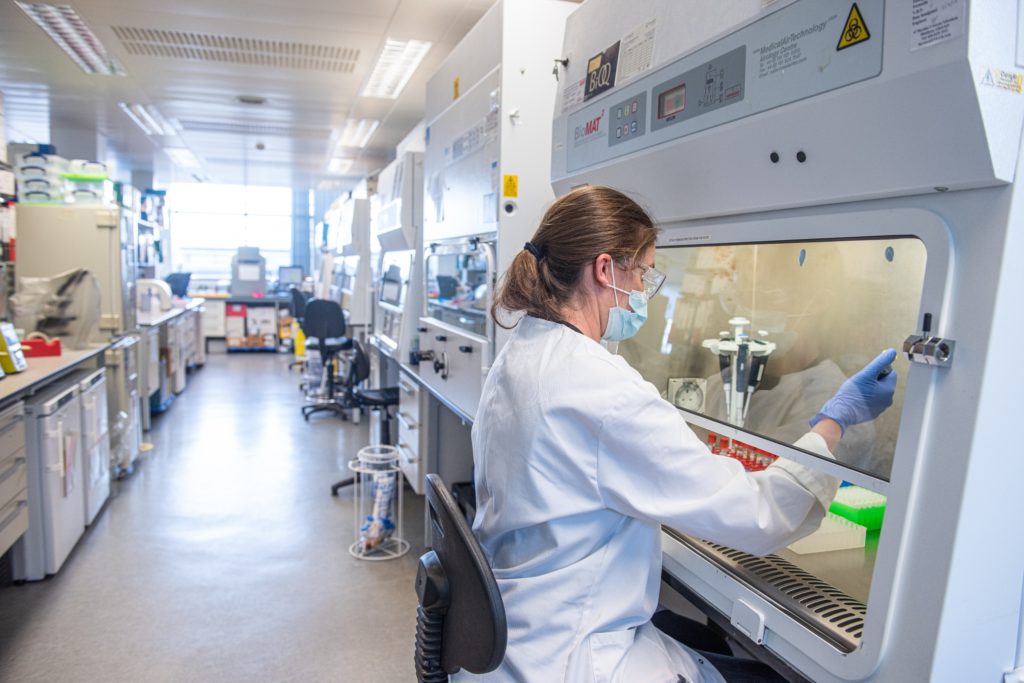
Development of the COVID-19 vaccine at the Oxford Vaccine Group labs
(photo John Cairns)

The COVID-19 pandemic highlighted the risks to human health of outbreak pathogens. The painstaking work done by BRC vaccine experts on another coronavirus, Middle East Respiratory Syndrome (MERS), was critical to the rapid development of the ChAdOx1nCoV-19 (Oxford-AstraZeneca) vaccine in 2020.

We are developing our portfolio of vaccines against bacterial and viral pathogens to enable us to respond to future outbreaks, epidemics and pandemics.

Our programme includes the development of vaccines against:

  • bacteria, such as plague and melioidosis (Whitmore’s disease) and
  • viruses, such as Lassa fever, Nipah virus, MERS, Rift Valley fever virus, Crimean-Congo haemorrhagic fever, Ebola virus disease and Marburg virus disease.

Our programme also involves the evaluation of vaccination regimens and understanding the immune response to vaccines or infection that is required to give a person protection from future infection (correlates of protection).

The LEGACY03 trial examines immune responses in the lymph nodes, small, but vital organs that play a key role in fighting infections and in making responses to vaccines. The study compares responses to flu and COVID-19 vaccines between younger and older adults, with the goal of uncovering insights that could lead to better, more tailored vaccines. 

Life-saving Vaccines icon

Life-saving Vaccines

  • Theme overview
  • Sub-theme 1: Outbreak pathogens
  • Sub-theme 2: Enteric vaccines
  • Sub-theme 3: ‘The big three’ – TB, malaria and HIV
  • Sub-theme 4: Childhood / pregnancy / perinatal vaccines
  • Sub-theme 5: Vaccines in chronic disease and ageing
  • Contacts
  • Videos
  • News
You are here: Home > Research Overview > Life-saving Vaccines > Sub-theme 1: Outbreak pathogens

Subscribe to the BRC Oxford Newsletter

Keep informed about the work of the BRC Oxford by subscribing to our Mailchimp e-newsletter. It is produced several times a year and delivers news and information about upcoming events straight to your inbox.

Subscribe Now

Feedback

We’d love to hear your feedback. Please contact us at obrcenquiries@ouh.nhs.uk

BRC Oxford on Social Media

  • Bluesky
  • Facebook
  • LinkedIn
  • YouTube
  • Data Control and Privacy
  • Accessibility
  • Our Partners
  • Disclaimer
  • Contact

Copyright © 2026 NIHR Biomedical Research Centre: Oxford