Oxford University researchers have found a way to detect ovarian cancer early and identified an enzyme that is key in making ovarian cancer more deadly. Their results, published in two journals and co-funded by the NIHR Oxford Biomedical Research Centre, provide new research routes for scientists ... READ MORE
Archives for July 2016
Training camp success for BRC student

A student funded by the NIHR Oxford Biomedical Research Centre led the winning team at a research training camp hosted by the National Institute for Health Research (NIHR). Dr Gurdeep Singh Mannu led the team at the NIHR’s Biomedical Research Centre Research Training Camp at Ashridge Business ... READ MORE
Health minister learns about digital innovation at Oxfordshire hospitals
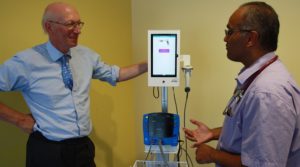
Lord Prior, Parliamentary Under Secretary of State at the Department of Health, is shown The System for Electronic Notification and Documentation (SEND) system at Oxford's John Radcliffe Hospital by Geratology Consultant by Dr Sudhir Singh Digital technology to improve patient care ... READ MORE
Rare mutations in bowel cancer may identify patients with a better prognosis
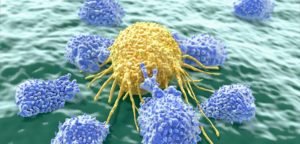
An international collaboration between the University of Oxford and other European institutions has uncovered a correlation between a rare mutation in bowel cancers and a better prognosis, raising the possibility that patients with such tumours may not require chemotherapy after surgery. The ... READ MORE
BRC supports Oxford Technology Showcase

Oxford BRC Director Prof Keith Channon (left) chaired a session on cardiovascular disease and stroke. Picture: John Cairns. The fourth annual Oxford Technology Showcase was held on Wednesday 6th July at Oxford’s Saïd Business School. The event brought together experts and innovators from Oxford ... READ MORE
Treatment targets HIV’s last hiding place

Picture: Wellcome Trust UK scientists may have found a way to destroy HIV's last refuge. A study by Oxford University has confirmed that a treatment developed by a British company can remove the virus in its chosen hiding place, in laboratory conditions, offering hope of a viable ... READ MORE
Gene sequencing offers way to beat global spread of gonorrhoea
With drug-resistant strains of sexually-transmitted infection gonorrhoeae increasing, scientists from Brighton, Oxford University and Public Health England have found that genetic sequencing can track the spread of infection. They show coordinated national and international strategies are required ... READ MORE
Genetics of type 2 diabetes revealed in unprecedented detail
The largest study of its kind into type 2 diabetes has produced the most detailed picture to date of the genetics underlying the condition. More than 300 scientists from 22 countries collaborated on the study, which analysed the genomes of more than 120,000 people with ancestral origins in ... READ MORE
BRC researcher honoured for Africa radio project

A researcher supported by the NIHR Oxford Biomedical Researcher has been recognised by the University of Oxford for work to communicate with children in Africa about the Ebola outbreak. Dr Matthew Snape was one of 12 winners in the inaugural Vice-Chancellor’s Awards for Public Engagement with ... READ MORE