A new project to help those affected by spinal cord injuries shape the research agenda has launched its website. Supported by the Oxford Biomedical Research Centre, The James Lind Alliance 'Spinal Cord Injury Priority Setting Partnership' will work with people with Spinal Cord Injury, Cauda ... READ MORE
News
WATCH: Simple approach to research is key to improving stroke treatment
Stroke is one of the biggest killers in the UK but world class research is helping cut the number of deaths and improve prevention. In the latest Oxford Biomedical Research Centre public talk, clinical neurologist Professor Peter Rothwell outlines leading stroke and related dementia ... READ MORE
Personalised brain stimulation could improve life for Parkinson’s sufferers
Researchers in Oxford have made a landmark breakthrough towards improving the treatment of advanced Parkinson’s disease. The Oxford University team based at the John Radcliffe Hospital has successfully trialled an advanced deep brain stimulation system that actively detects and responds to a ... READ MORE
First IVF baby with new embryo screening technique
A baby boy has been born to a couple in the USA by IVF involving the use of a new embryo screening approach. The method uses the latest DNA sequencing techniques and aims to increase IVF success rates while being more affordable for more couples. The work was a collaborative effort. It ... READ MORE
Oxford heart research centre gets £6m boost
Ground-breaking heart research in Oxford has been given a multi-million pound boost thanks to the British Heart Foundation (BHF). The Oxford BHF Centre of Research Excellence, one of only six in the UK, has been awarded a further £6m by the charity to continue its work. The Oxford Centre ... READ MORE
Research on the rise
Clinical research at Oxford University Hospitals increased last year making it one of the highest recruiting Trusts in England. According to a new league table of research supported by National Institute for Health Research Clinical Research Network, OUH recruited 16,368 patients in 321 studies ... READ MORE
WATCH: Research open day highlights
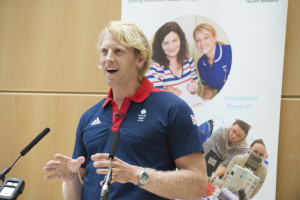
Hundreds visited last month's research open day, but if you missed out you can now catch up on the highlights here. Interactive exhibitions showcased the breadth and importance of the centre’s research and the public had the chance to tour would-class research facilities including the £13m ... READ MORE
Research proves a hit as hundreds visit open day
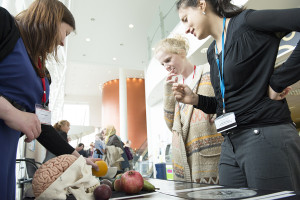
OLYMPIC gold medallist Andrew Triggs Hodge was among hundreds of visitors to our research open day at the John Radcliffe Hospital yesterday. Teams from the National Institute for Health (NIHR) Oxford Biomedical Research Centre demonstrated pioneering science and its impact on healthcare to ... READ MORE
Gold standard set for open day
Double Olympic gold medallist Andrew Triggs Hodge has lent his support to our annual open day. Teams from the National Institute for Health (NIHR) Oxford Biomedical Research Centre will be demonstrating world-class research tackling conditions including stroke, dementia, diabetes and heart disease ... READ MORE
Centre expansion strengthens musculoskeletal research
NEW state-of-the-art research facilities in Oxford will enhance the treatment of musculoskeletal injuries, strengthen the fight against bone cancer and improve arthritis care. Research teams have now moved into the £6m “phase 2” of the Botnar Research Centre, based at the Nuffield Orthopaedic ... READ MORE
- « Previous Page
- 1
- …
- 79
- 80
- 81
- 82
- 83
- …
- 96
- Next Page »