A new project led by the University of Oxford aims to develop a novel breathing test that could detect asthma and COPD earlier, more accurately, and closer to home, reducing pressure on the NHS and improving outcomes for patients.
This work is included in a portfolio of research funded by the Engineering and Physical Sciences Research Council (EPSRC), part of UK Research and Innovation, to make diagnostic testing more accessible by designing simple, affordable tools that can be used in everyday settings.
The project, called ACCESS (A Community-based diagnostiC for early airwayS disease), focuses on airway diseases, and will receive £1.3 million over three years. Supported by the NIHR Oxford Biomedical Research Centre, the project includes investigators Professors Nayia Petousi and Nick Talbot from the Oxford BRC Respiratory Medicine Theme.
Chronic respiratory diseases such as asthma and chronic obstructive pulmonary disease (COPD) affect more than half a billion people worldwide and cause over four million deaths every year. In the UK, these conditions hit disadvantaged communities hardest, with people in areas of socioeconomic deprivation facing particular challenges in accessing hospital-based diagnostic care.
Currently, asthma and COPD diagnosis relies on a test called spirometry. This measures how much air a person can forcefully breathe out, but it is difficult for many patients to perform and often fails to detect disease in its earliest stages. By the time spirometry picks up abnormalities, damage to the lungs is usually irreversible, resulting in late diagnoses, missed chances for early treatment, and poorer outcomes.
To address these issues, Oxford researchers have developed a new test, known as computed cardiopulmonography (CCP), which could transform the way lung diseases are diagnosed.
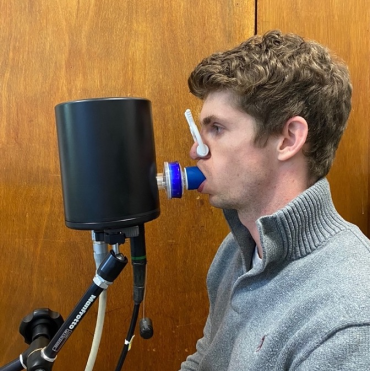
CCP is performed while a patient breathes normally for 12 minutes through a mouthpiece linked to a highly accurate gas analyser. Using cutting-edge laser technology and advanced mathematical modelling, the test captures a detailed picture of how evenly air flows through the lungs.
This “fingerprint” of lung function changes early in the course of disease, making CCP a powerful tool for spotting subtle problems that spirometry can miss.
Early studies in people with asthma, COPD, and even in otherwise healthy smokers suggest CCP is a highly sensitive marker of small airways damage. But while the results are promising, the test currently takes too long and requires specialist gas supplies, restricting its use to hospitals and research labs.
The goal of the ACCESS project is to adapt CCP for community use, for instance in GP surgeries, pharmacies and community diagnostic hubs. Specifically, the research team will work to reduce the time duration and volume of gas needed for each test and speed up the data analysis so that results can be shared with the patient during the same appointment.

Towards the end of the project, CCP will be trialled in a community diagnostic centre to gather feedback from patients and healthcare professionals.
The long-term goal is to support earlier diagnosis and treatment, helping reduce hospital visits and tackle health inequalities. By enabling earlier intervention and delivering care closer to home, CCP has the potential to improve outcomes for millions of people living with lung disease.
The highly multidisciplinary project brings together researchers from Oxford University’s Department of Chemistry; Department of Physiology, Anatomy & Genetics; Nuffield Department of Medicine & NIHR Oxford Biomedical Research Centre; Nuffield Department of Primary Care Health Sciences & the Oxford NIHR Healthtech Research Centre (HRC).
They will collaborate with healthcare providers, the national charity Asthma + Lung UK, and patients with asthma and COPD to shape the research at every stage. Patients, including those from disadvantaged communities most affected by airways disease, will meet regularly with investigators to advise on study design and delivery.
Project lead Professor Grant Ritchie from the Department of Chemistry, said: “To improve lung health, we need to move from fire-fighting advanced disease to detecting and treating it earlier, when it is still possible to prevent progression. With EPSRC support, we are developing a rapid, non-invasive breath test that could provide immediate results in community diagnostic settings and transform early diagnosis.”
Professor Charlotte Deane, EPSRC Executive Chair and a Professor in Oxford University’s Department of Statistics, said: “Diagnosing health conditions early and in a way that works for people’s everyday lives is vital. By enabling care closer to home as well as earlier intervention, these projects will help shift the system from treatment to prevention, improve outcomes, tackle health inequalities, and ease pressure on hospitals.”