

A multidisciplinary team comprising University of Oxford academics and Oxford University Hospitals (OUH) pathologists has developed an algorithm that automates requests for additional investigation of diagnostically uncertain prostate biopsies. The team were supported by the NIHR Oxford BRC ... READ MORE
News for Cancer
New clinical prediction tools for myeloma developed
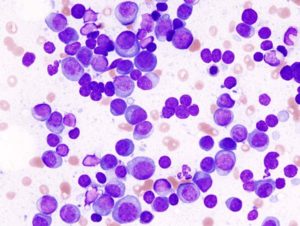
University of Oxford researchers have developed new clinical prediction models for use in primary care with the aim of accelerating the diagnosis of myeloma, a cancer of the bone marrow. Myeloma caused 117,077 deaths worldwide in 2020. Earlier diagnosis improves the rate of survival but ... READ MORE
Classification system uncovers new information about ovarian cancers
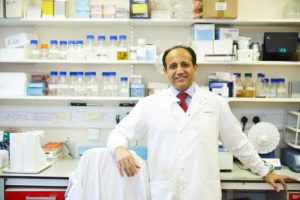
An Oxford-based ovarian cancer specialist has published a paper outlining a new classification which categorises different subtypes of cells and determines which ones can lead to more severe cancer outcomes. This approach, dubbed the ‘Oxford Classification of Carcinoma of the Ovary’ or ‘Oxford ... READ MORE
Using AI to improve the quality of endoscopy videos
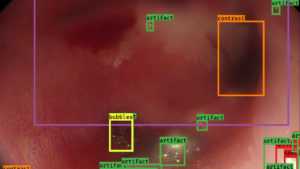
A multidisciplinary team of researchers has developed a deep-learning framework for improving endoscopy to aid the detection of cancer and other gastrointestinal diseases. Cancers detected at an earlier stage have a much higher chance of being treated successfully. The main method for ... READ MORE
New melanoma drug a step closer to the clinic

A new anti-tumour immune response drug for patients with metastatic melanoma has given positive results in clinical trials conducted by the University of Oxford and the UK biotech company Immunocore. The trials into the use of tebentafusp for metastatic uveal melanoma mean the drug could now be ... READ MORE
$410 million buy-out for Oxford cancer detection technology

Oxford biotechnology spin-out company Base Genomics has been acquired by the US early cancer detection company Exact Sciences for $410 million. Base Genomics, which was launched in June 2020, is based on Dr Chunxiao Song’s innovative TET-assisted pyridine borane sequencing (TAPS) ... READ MORE
Minimal risk of catching COVID-19 as a result of endoscopy, study finds
More than 6,000 patients who underwent endoscopy at 18 NHS hospitals since the start of pandemic have been tested and none contracted COVID as a result of the procedure, a study involving clinicians from Oxford University Hospitals (OUH) NHS Foundation Trust has found. Clinicians hope the ... READ MORE
Eight BRC projects get RCF funding

Eight Oxford BRC proposals, many covering a number of themes, have been awarded NIHR Research Capability Funding (RCF) funding to take forward key areas of research. The selected projects that will be supported include: Developing a research centre devoted to urgent and acute careThe ... READ MORE
Home colorectal cancer tests could prioritise patients for referral
Non-invasive home-based tests that detect blood in patient stool samples offer an accurate and appropriate triaging method for GPs, according to University of Oxford researchers. The study, which is already informing a redesign of the colorectal cancer pathway at Oxford University Hospitals (OUH) ... READ MORE
Study sheds light on breast cancer risk after pre-invasive disease

Women who are diagnosed with ductal carcinoma in situ (known as DCIS) during breast screening go on to experience higher risks of developing breast cancer and of death from breast cancer, compared with the general population, according to a study by Oxford researchers. DCIS is a disease where ... READ MORE
BRC cancer lead elected Royal Society Fellow

The NIHR Oxford BRC’s Theme Lead for Cancer, Professor Xin Lu, has been elected as a Fellow of the Royal Society, in recognition of her contribution to cancer biology. As well as her role with the Oxford BRC, Xin Lu is Director of the Ludwig Institute for Cancer Research, Oxford Branch in the ... READ MORE
Seven new Senior Fellows named

The Oxford BRC is delighted to announce the appointment of seven new Senior Research Fellows, the second cohort of emerging research leaders to receive the accolade. The selection process was a coordinated effort by the Oxford BRC and its partners in the NIHR Oxford Health BRC, which focuses on ... READ MORE
Study suggests immune system plays key role in survival after pancreatic cancer surgery
Researchers in Oxford have found that an individual’s immune system – and in particular the presence of T-cells amongst tumour cells - may play an important role in survival after surgery to remove pancreatic cancer. The study by the University of Oxford’s Department of Oncology and Kennedy ... READ MORE
Ultrasound and nanomedicine offer new hope for improving effects of cancer drugs

In a breakthrough that allows the more precise targeting of drugs at cancers, a University of Oxford team has used ultrasound and lipid drug carriers to remotely trigger and enhance the delivery of a cancer drug in humans for the first time. The study was conducted by researchers from the ... READ MORE
Health minister visits Oxford BRC
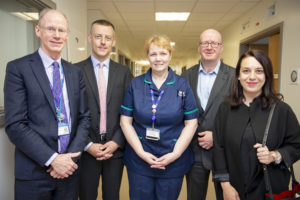
The Health Minister, Lord O'Shaughnessy, visited the NIHR Oxford BRC on Wednesday 30 May to take a look at the ground-breaking research that is taking place in the fields of cancer and genomics. He was accompanied on the tour by Oxford BRC Director Prof Keith Channon and Head of Research ... READ MORE
New clinical trial aims to tackle bowel cancer
Oxford University Hospitals has started a clinical trial which combines the use of immunotherapy with a protein-inhibiting drug for use with difficult-to-treat bowel cancer. Immunotherapy combined with checkpoint inhibitor drugs has been used successfully as treatment for several cancers, ... READ MORE
Top Oxford cancer specialist retires from clinical work

One of Oxford’s leading breast cancer specialists is stepping down from clinical work, after working in the city for nearly 30 years, but will continue his research activities, which, with the support of NIHR Oxford BRC, have seen big advances in recent years. Prof Adrian Harris has been the ... READ MORE
Celsion announces TARDOX study combining ThermoDox and focused ultrasound to tackle cancers
Celsion Corporation has launched a clinical trial, supported by the National Institute for Health Research (NIHR) Oxford Biomedical Research Centre (BRC), to study the effectiveness of combining cancer drug ThermoDox with focused ultrasound to treat a range of tumours, including liver cancer The ... READ MORE
New bowel cancer test could save lives through early detection
A new screening test, funded by NIHR Oxford BRC, is being hailed the most efficient way to indicate risk of colorectal cancer. First stage UK research, published today, shows that an advanced computer algorithm technology can successfully indicate levels of risk by analysing previous blood test ... READ MORE
Public Health Minister Visits Oxford Cancer Hospital ahead of World Cancer Day
Ahead of World Cancer Day on February, Public Health Minister Nicola Blackwood highlighted the importance of UK scientific research to beating cancer during a visit to the Churchill Hospital. The Public Health and Innovation Minister saw state-of-the-art clinical trials and facilities for new ... READ MORE