
A Wellcome Trust article highlights the work of Professor Heidi Johansen-Berg at the University of Oxford and her research exploring the structural changes in the brain’s white and grey matter that underlie learning. Understanding the precise cellular nature of those changes may improve diagnosis of ... READ MORE
News Archive
Oxford University Hospitals rated in top 5 for research activity
Oxford University Hospitals NHS Trust is one of the top Trusts leading the way in providing opportunities for patients to take part in clinical research studies. Highlighted in a league table1 published for the first time by the National Institute for Health Research (NIHR) Clinical Research ... READ MORE
Treating the brain with tiny electric currents may aid stroke recovery
Tiny electric currents applied across regions of the brain can improve hand movements in recovering stroke patients for a short period, an Oxford University study has demonstrated. The researchers are hopeful that developing this brain stimulation technique further may provide a useful addition ... READ MORE
New treatment for lung, liver and renal tumours
Doctors, surgeons and researchers from the Imaging Theme of the NIHR Biomedical Research Centre, Oxford are looking into the effectiveness of using ablation as another treatment option for lung, liver and renal tumours. Microwave Ablation is used to treat small tumors by passing ... READ MORE
Ten years of collaboration brings new hope for patients

NIHR funded doctors, surgeons and scientists from the HIFU Unit (high intensity focused ultrasound), marked its official opening at the Churchill Hospital after a 10 year collaboration with the Haifu Company of China. The £1.5m Oxford HIFU machine has been given on long-term loan from the ... READ MORE
Hospitals merge on 1st November
Four Hospitals, One Trust, One Vision Sir Jonathan Michael, Chief Executive of the newly created Oxford University Hospitals NHS Trust marked the merger between the former Nuffield Orthopaedic Centre and the Oxford Radcliffe Hospitals NHS Trusts with a tour around the four hospital sites on ... READ MORE
Richard Gillies wins top Moynihan Prize

Dr Richard Gillies is an SpR in Upper GI surgery. He recently won the top Moynihan prize for 2011 for his work in: TUMOUR EXPRESSION OF THE DNA REPAIR PROTEIN, XPF, PREDICTS PATHOLOGICAL RESPONSE TO NEOADJUVANT OXALIPLATIN CHEMOTHERAPY IN OESOPHAGEAL CANCER R. S. Gillies*1, D. Delaney1, B. Warren1, ... READ MORE
Man treated in Oxford for blindness with gene therapy
Researchers in Oxford have treated a man with an advanced gene therapy technique to prevent him from losing his sight. It is the first time that anyone has tried to correct a genetic defect in the light-sensing cells that line the back of the eye. The president of the Academy of Medical ... READ MORE
Embryo ‘health check’ could improve IVF chances
A new test developed by Oxford scientists could tell couples within 24 hours if they will ever be able to have a baby through IVF and improve success rates. Dr Dagan Wells from Oxford University, who led the research, said: “I think it offers the possibility of enhancing success rates of IVF, ... READ MORE
Collaboration and positive change
Mark Sheehan is James Martin Fellow in the Institute for Science and Ethics and Oxford Biomedical Research Centre (BRC) Ethics Fellow at the Ethox Centre. In this interview he outlines some of the collaborative projects in which he has been involved since joining the Oxford Martin School. The ... READ MORE
Rury Holman receives award
Rury Holman, Professor of Diabetic Medicine and director of the Diabetes Trials Unit, at the Churchill Hospital, and member of the NIHR funded Diabetes Research Theme, has received the Harold Rifkin Award 'for Distinguished International Service in the Cause of Diabetes' from the American Diabetes ... READ MORE
The amazing story of my father’s brain
The Thomas Willis Oxford Brain collection features in a Sunday Telegraph article by local journalist Vikki Owen. She talks movingly about donating her father's brain to research and his struggle with MS. The Thomas Willis Oxford Brain Collection is a collaborating centre for the Brains for ... READ MORE
Hamamatsu high throughput digital slide scanner and PathXL image analysis software available for research
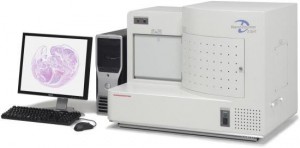
A Hamamatsu high throughput digital slide scanner along with a sophisticated image analysis package from iPath is now available to researchers. The Hamamatsu NanoZoomer 2.0-HT slide scanner enables researchers to digitise their glass slides allowing the images to be interpreted on a screen with ... READ MORE
Doctoral student commended
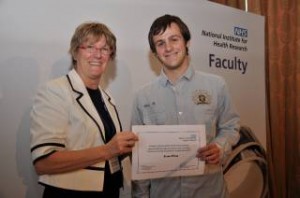
Congratulations to Sean Elias, a doctoral student at the Jenner Institute. He is pictured receiving a 'highly commended' prize for his oral presentation at the NIHR Training Camp this summer from Professor Dame Sally Davies, the Chief Medical Officer and Head of the National Institute for Health ... READ MORE
Patients to benefit from more than £95m in research funding
Leading medical researchers in Oxford have been recognised for their outstanding contribution to healthcare research by the National Institute for Health Research (NIHR) today by being awarded £95m, an increase of 50%, to support translational research. The NIHR Biomedical Research Centre, Oxford ... READ MORE
Researchers trial new drug for women with hereditary breast and ovarian cancer
A CANCER RESEARCH UK-funded trial of a new drug for patients with advanced breast or ovarian cancer due to inherited gene faults has been launched at the Oxford Experimental Cancer Medicine Centre (ECMC) at the University of Oxford. The trial, led by a team based at the National Institute for ... READ MORE
New two-drug approach to treat type of respiratory disease
A therapy combining two existing drugs could provide an effective new approach for treating patients with pleural infections, a serious condition where infected fluid builds up in the space between the ribs and lungs. A randomised clinical trial conducted by Oxford University researchers in the ... READ MORE
Small molecules found to play complex role in cancer metastasis
While they may be small in size, a family of tiny molecules called microRNAs could potentially play a large role in the process of cancer metastasis, or the spread of cancer from one area of the body to another. A team of researchers from The Cancer Institute of New Jersey (CINJ) and Princeton ... READ MORE
JR is home to UK’s most powerful scanner
On Sunday 31st July weighing in at 35 tonnes, the new 7 Tesla magnet scanner was lowered into place by a crane through the ceiling of the Oxford Centre for Functional MRI of the Brain (FMRIB) where it will be used for clinical trials into to help researchers further understand brain disorders, such ... READ MORE
Professor Peter Ratcliffe and oxygen levels
To mark the 75th anniversary of the death of Henry Wellcome and the founding of the Wellcome Trust, they are publishing a series of 14 features on people who have been significant in the Trust’s history. In this final piece, science writer Anjana Ahuja looks at Peter Ratcliffe, the Professor of ... READ MORE
- « Previous Page
- 1
- …
- 42
- 43
- 44
- 45
- 46
- …
- 49
- Next Page »