We want to be sure that our current and future research is relevant and focuses on what matters most to those who need it. It’s therefore vital that patients, carers and members of the public are encouraged to get involved in that research. Nowhere is this more relevant that in research that aims to support older patients, many of whom are frail and at greater risk of delirium and dementia. Two of the carers who are members of the patient and public involvement group of the Oxford BRC-supported ORCHARD portfolio studies explained its importance.
More than half of people admitted to NHS hospitals are aged 65 or older; almost half of them have a cognitive disorder such as delirium or dementia and around 40% are physically frail. The ORCHARD portfolio of studies, which is led by Professor Sarah Pendlebury and supported by the NIHR Oxford Biomedical Research Centre, aims to understand how hospital illnesses interact with the brain to cause delirium and future dementia, as well as frailty.
To ensure our research is relevant and focuses on what matters most to those who need it, it’s vital that patients, carers and members of the public play a key role in shaping that research. However, despite the high numbers of older people who need hospital care, this group has not been well represented in health and care research to date, partly owing to challenges in taking part either as a research participant or in shaping the research agenda through PPIE.
The ORCHARD (Oxford and Reading Cognitive Comorbidity, Frailty and Ageing Research) team has worked hard to develop a patient and public involvement and engagement (PPIE) group that includes people with lived experience of frailty, unplanned hospital admission and cognitive decline. Some of these are current or former patients, while others are carers.
Two members of this ORCHARD group are Jo Kirk, from north Northamptonshire, and Claire, from Oxford, who both got involved as a result of their parents’ interactions with the healthcare system.
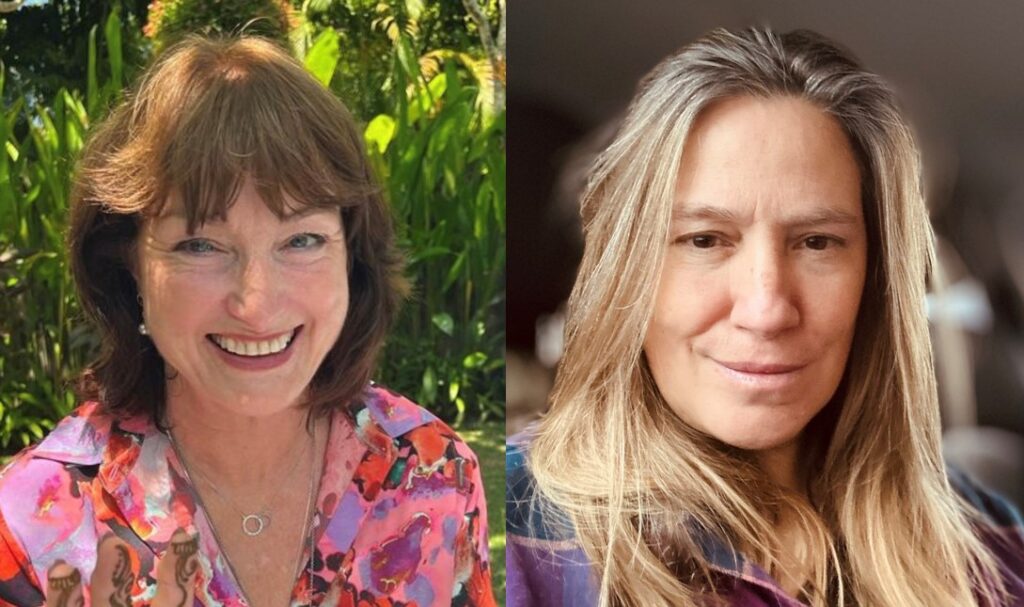
Jo’s involvement in PPI started around nine years ago as a research network volunteer with the Alzheimer’s Society, a role she still has. Her late mother had Alzheimer’s and Jo was motivated to get involved in the ORCHARD study after her mum had a serious fall and broke her pelvis soon after moving into a care home. During the resulting stay in hospital, Jo says, she presented with symptoms of delirium.
“It was a hard time,” Jo says. “But there were certainly other people in the ward who were going through a similar thing. It was just so busy. Staff were doing what they could, but delirium isn’t always recognised early enough.”
Jo was approached by Mary Sneade, PPIE Lead for the ORCHARD Study, about getting involved in the PPIE group, given her experience in the Alzheimer’s Society.
“I feel quite passionately about it, and I just thought it was a brilliant study.” Jo says. “It’s an opportunity to represent the people in my life who have passed, friends I know who have difficulties because of their care issues, and to be able to have a voice.”
“You feel very passionate about helping your relative, but also,
being a part of this process,
you hope will help others in the future.”
Claire
Claire got involved in the group after her father had been affected on a number of occasions by delirium after being admitted to hospital. “I am very close to my father, and he’s been very unwell at several different times. Hospital-induced delirium is a very scary condition because suddenly you see your relative ‘dissolve’ and it happens very quickly.”
Claire’s father was assessed at the Oxford Memory Clinic and he and Claire were asked about getting involved in the ORCHARD Study. She says: “I come from a science background, and I’m very interested in how people could be helped by this kind of research, because there’s a lot that needs to be done and it’s nice to feel that you’re part of that process, which hopefully helps to bridge the gap between not knowing and being able to solve what I think is the biggest problem for the healthcare system going forward – how we manage dementia and delirium.”
Members of the ORCHARD PPIE group meet a couple of times a year. And they do make suggestions that make a concrete difference.
On Jo’s advice, the newsletter produced by the study team to present findings to participants has been simplified and made more accessible. She says one of the key qualities that the PPIE contributors make is to convey how things might be received by patients and their carers.
“It’s the capacity to be realistic, so that when things are proposed, you automatically think of your own experience and how actionable they are. How would it be accepted by a certain family or a certain individual?”
Claire says that the group offers a vital sounding board for ethical issues, such as the use of a patient’s data, including the results of brain scans: “whose responsibility might it be, for example, if you were to discover something during those processes about someone’s dementia risk, to then discuss that prognosis with them? What if they don’t want to be told? That kind of detail about ethics is certainly something we discuss. And it’s good because it’s coming from the patient’s side, so you’re thinking what your loved one or you would want.”
“When things are proposed, you automatically think of
your own experience and how actionable they are.”
Jo Kirk
Claire and Jo believe it’s important that the voices of those who are frail and vulnerable are heard in the research that impacts on them.
Claire says: “I personally take my role as my father’s advocate very, very seriously. When people have cognitive issues, whatever age they are, it’s imperative to involving them and their caregivers in the direction of travel of any part of their lives, and especially their health and social care.
“You can’t do a study with people who are that vulnerable without somebody being an advocate and representing them. And you see something very differently as a carer. I’m sure everyone in the study feels the same – you feel very passionate about helping your relative, but also, being a part of this process you hope will help others in the future.
“Even when people are old and frail and vulnerable, they love the idea of making a difference. It’s a really powerful thing to think that actually, part of yourself and your health is actually potentially making a difference for future generations.”
That perspective of helping other people in future is echoed by Jo: “It’s given me the opportunity to help in the move to reduce instances of delirium in hospital for elderly people, so that it’s identified and other families don’t have to go through what me and my sisters had to go through with our late mother and what she had to go through.”
By its very nature, being a carer can entail experiencing some difficult moments. Jo says that being part of a group of people who have gone through similar experiences has been helpful.
“It brings together groups of people who are either going through or have been through supporting a loved one through dementia. Certainly, in the earlier days when my mum was still alive, that really helped me personally. We were there to do a job within the research groups, but people automatically supported you because they were going through a similar thing.”