
NIHR Biomedical Research Centre: Oxford

Enabling translational research through partnership

NIHR 20th Anniversary NIHR website
NIHR Biomedical Research Centre: Oxford
  • Home
  • About
    • About us
    • Impact
    • Our next BRC
    • Steering Committee
    • Promoting equality, diversity and inclusion in research
    • Current Vacancies
    • Stay in Touch
    • Contact Us
  • Research
    • Research Overview
      • NIHR Clinical Research Facility
      • Ethics in the NIHR BRC: Oxford
      • Health Economics
      • Medical Statistics
    • Cancer
    • Cardiovascular Medicine
    • Digital Health from Hospital to Home
    • Gene and Cell Therapy
    • Genomic Medicine
    • Imaging
    • Inflammation across Tissues
    • Life-saving Vaccines
    • Metabolic Experimental Medicine
    • Modernising Medical Microbiology and Big Infection Diagnostics
      • Theme overview
      • Infections in Oxfordshire Database (IORD)
    • Musculoskeletal
    • Preventive Neurology
    • Respiratory Medicine
    • Surgical Innovation, Technology and Evaluation
    • Translational Data Science
  • Patient & Public Involvement
    • For patients and the public
    • For researchers
    • More information
  • Training
  • Industry & Partnerships
  • News
  • Events
  • Videos

News

Researchers uncover how Parkinson’s disease protein damages brain cells

13 August 2026 · Listed under Preventive Neurology, Treatment to Prevention

A new study has revealed a key mechanism by which a protein associated with Parkinson’s disease damages neurons (brain cells) by blocking a vital cellular gateway. The findings help to explain how the disease begins and highlights a potential new target for treatment.
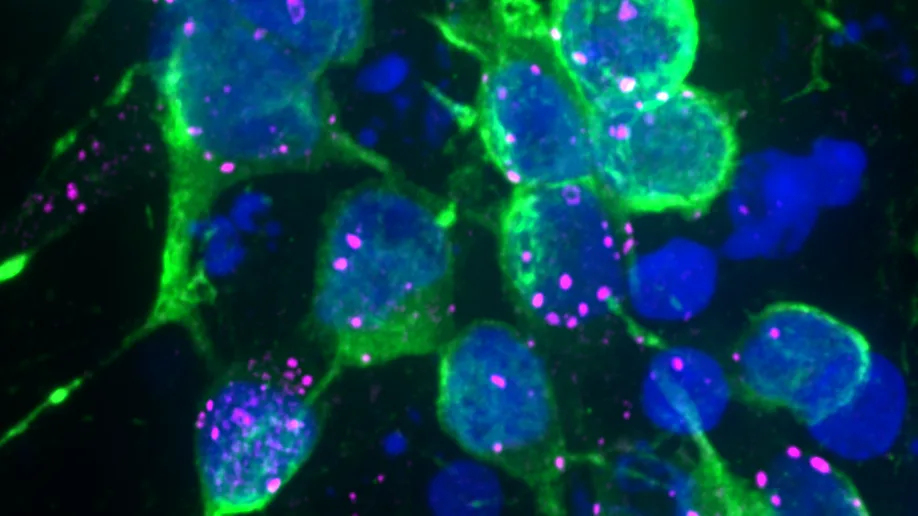
microscopic image of brain cells affected by clumps of the protein alpha-synuclein
Neurons with aggregates of alpha-synuclein (Tofaris group)

Parkinson’s disease, which affects more than 10 million people worldwide, is characterised by the build-up of abnormal clumps of the protein alpha-synuclein inside brain cells, but scientists have long struggled to understand exactly how these toxic forms of the protein cause neurons to malfunction and eventually die.

The study, published in Nature Communications, was supported by the NIHR Biomedical Research Centre: Oxford.

The researchers from the University of Oxford’s Nuffield Department of Clinical Neurosciences (NDCN) combined advanced molecular analyses of human stem cell models of Parkinson’s disease with studies of post-mortem brain tissue from people with Parkinson’s disease to investigate the earliest stages of the disease process.

They found that toxic forms of alpha-synuclein bind to a protein called Sec61A, blocking part of a molecular ‘gateway’ that helps newly made proteins enter the cell’s protein-processing centre, known as the endoplasmic reticulum.

Blocking this gateway did not activate the classical cellular stress response normally associated with damage to the endoplasmic reticulum. Instead, neurons activated an alternative quality-control pathway, suggesting that this represents a previously unrecognised early event in Parkinson’s disease.

Professor George Tofaris

Professor George Tofaris (pictured left), senior author of the study, explained: “Our work shows that toxic alpha-synuclein blocks one of the cell’s most fundamental protein delivery systems. This provides a unifying explanation for why many different genetic risk factors for Parkinson’s disease ultimately disrupt the same cellular processes.

“Perhaps the most encouraging finding was that we could reverse these defects in human neurons by boosting the cell’s own protein-clearance machinery. Although much more work is needed before this approach can be tested in patients, our findings provide a rationale for exploring this strategy as an early treatment for Parkinson’s disease.”

Read the full story on the NDCN website.

← First patient dosed in oesophageal cancer vaccine trial

Other news

News Categories

News by Month

See all news
You are here: Home > Preventive Neurology > Researchers uncover how Parkinson’s disease protein damages brain cells

Subscribe to the BRC Oxford Newsletter

Keep informed about the work of the BRC Oxford by subscribing to our Mailchimp e-newsletter. It is produced several times a year and delivers news and information about upcoming events straight to your inbox.

Subscribe Now

Feedback

We’d love to hear your feedback. Please contact us at [email protected]

BRC Oxford on Social Media

  • Bluesky
  • Facebook
  • LinkedIn
  • YouTube
  • Data Control and Privacy
  • Accessibility
  • Our Partners
  • Disclaimer
  • Contact

Copyright © 2026 NIHR Biomedical Research Centre: Oxford