
The first stage of recruitment has begun in a University of Oxford study that will see participants infected with the hepatitis C virus – and treated – an important first step on the road to possible future testing of vaccine candidates against the disease.
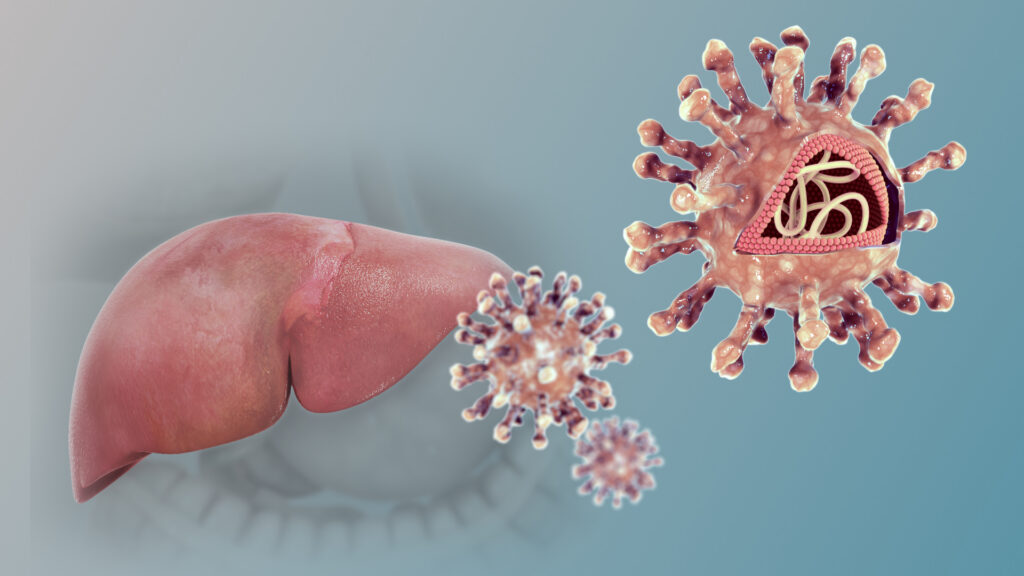
If untreated, hepatitis C can cause serious damage to the liver, which can lead to cirrhosis, liver cancer and liver failure. Tens of millions of people worldwide have the disease, including tens of thousands of people in the UK.
In this first phase of the HIT study – which is supported by the NIHR Biomedical Research Centre: Oxford and being carried out at the NIHR Clinical Research Facility: Oxford – adult volunteers with chronic or acute hepatitis C virus (HCV) who have not started treatment are donating their blood.
After being screened, this blood will be tested to check the amount of virus in the plasma and then stored safely for use in the next phase of the study – a human challenge model, where healthy volunteers are intentionally infected with the HCV, so they can then be treated and cured of the virus. This stage of the trial will begin next year.
Although human challenge models – also known as controlled human infection model or CHIMs – have been used for several diseases, this would be the first to be carried out for HCV, a disease that is fully treatable but lacks a much-needed vaccine to prevent infection.
Because hepatitis C can be reliably and safely treated and because of the difficulties testing hepatitis C vaccine candidates in early stages, CHIMs are increasingly regarded as a necessary step towards developing HCV vaccines.
Dr Maeve Barlow, Clinical Lead on the HIT study, said: “Opening recruitment is an important step towards building the world’s first human challenge model for hepatitis C, and we’re already seeing positive engagement with the study. We would like to thank the generosity of the participants living with Hepatitis C for giving their time to help advance our research, whose eventual aim is to one day prevent hepatitis C infection and so protect millions of people.”

“We also appreciate the support of 1DaySooner for helping to get the study off the ground. The University of Oxford is a global leader in the human challenge environment, with recent successes using SARS-CoV-2 and typhoid models, amongst several other diseases. We’re confident that this model will form the basis for successful HCV vaccine development.”
The study, which also involves Imperial College London and Ghent University in Belgium, has received more than £2 million from the research grant-making foundations Coefficient Giving and Founder’s Pledge, and is endorsed by 1Day Sooner, a non-profit organisation that represents the interests of volunteers in high-impact, high-burden infectious disease research, including controlled human infection studies.
Circe McDonald, Director of Clinical Trials at 1Day Sooner, said: “Additional tools, such as a vaccine, will be essential in the fight to eradicate hepatitis C, saving and improving many lives now and countless lives in the future. 1Day Sooner believes these trials are among the most impactful in the world. We are grateful to collaborate with the University of Oxford on behalf of many altruistically motivated healthy volunteers who are eager to contribute to global health by participating in clinical trials.”