
An international clinical trial to test a potential treatment for people with coronary inflammation has got under way at Oxford University Hospitals. The FORTIFY study was launched at the Acute Multidisciplinary Imaging and Interventional Centre (AMIIC), a state-of-the-art facility within the NHS-University partnership in Oxford, and it has now recruited the first participant in Europe.

The study, which is sponsored by the US biopharmaceutical company Abcentra, is testing orticumab, a human monoclonal antibody used as an anti-inflammatory treatment for heart inflammation. Around 240 people will take part in the trial in the United States and Europe.
All the participants in the trial have had a previous heart attack and currently experience high levels of coronary inflammation. This inflammation is based on the fat attenuation index (FAI) score, a method developed at the University of Oxford and delivered through the Oxford spin-out company Caristo Diagnostics.
The technology measures the change in structure in the peri-vascular adipose tissue that surrounds the coronary arteries using a routine coronary computed tomography angiography, or a heart CT scan. A high FAI score has become an important biomarker indicating greater inflammation and increased risk of heart attacks, and it is used clinically within the NHS and other healthcare systems around the world.
British Heart Foundation Professor Charis Antoniades, who developed the FAI score and who is the principal investigator for the FORTIFY trial in the UK, said: “We are becoming better at identifying those people who are at greatest risk of a heart attack and this trial is an opportunity to see if orticumab, this new experimental drug, is effective at reducing inflammation in the heart after a cardiac event.
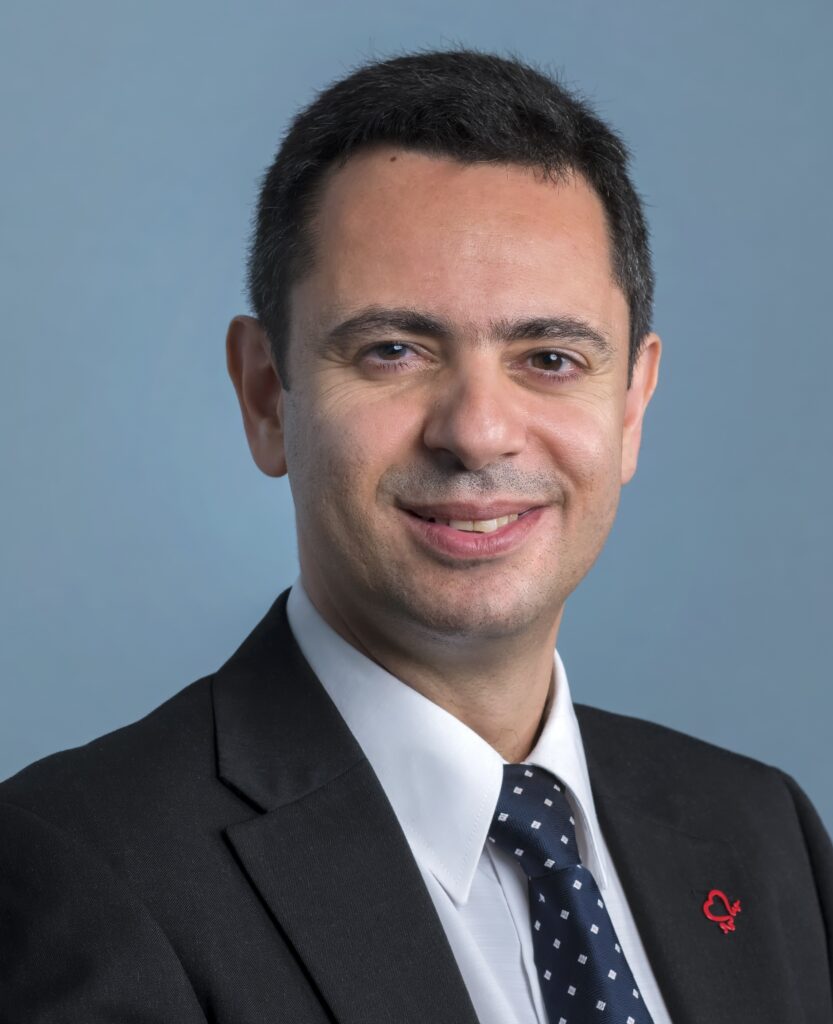
“Orticumab is an antibody – a kind of protein made by the immune system – that has been designed to reduce inflammation in the arteries of the heart by binding to oxidised low-density lipoprotein, a harmful form of cholesterol that promotes inflammation. The recruitment of this first participant in Europe is an important milestone in this trial.”
Professor Antoniades’s work in developing the FAI score was supported by the NIHR Oxford Biomedical Research Centre and the British Heart Foundation.
FORTIFY is a double-blind, randomised, placebo-controlled study, meaning participants are randomly assigned to one of four groups and neither participants nor study doctors know which treatment group they are in. One third of the participants will receive six orticumab doses intravenously; another third will receive one intravenous injection of orticumab, followed by five subcutaneous injections of the drug – that is into the fatty tissue above the muscle layer; the remaining third of participants will receive the placebo – with half of them receiving it intravenously and the rest subcutaneously.