
An international team of researchers has developed an experimental blood test that could help to identify biological changes linked to Parkinson’s disease, opening a potential path towards earlier and less invasive diagnosis of the disease.
The researchers included scientists from the University of Oxford’s Nuffield Department of Clinical Neurosciences (NDCN), supported by the National Institute for Health and Care Research Biomedical Research Centre: Oxford, and from the King Abdullah University of Science and Technology in Saudi Arabia.
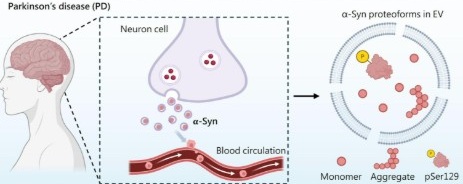
The study, published in Science Advances, developed a test that uses a highly sensitive electronic sensor to measure three different forms of the protein alpha-synuclein in tiny particles released by nerve cells into the blood. Alpha-synuclein accumulates abnormally in the brains of people with Parkinson’s disease.
Parkinson’s disease is a progressive neurological disorder in which symptoms typically become apparent only after substantial changes have already occurred in the brain. Brain imaging can help with diagnosis, but it is costly and is not suitable for large-scale screening.
Developing reliable biomarkers that can identify the disease at an earlier stage is therefore an important goal for neuroscience researchers, particularly as treatments designed to slow or prevent neurodegeneration are being developed.
In the study, which involved 66 people, the sensor was able to detect very small amounts of the protein and distinguish participants with Parkinson’s disease or isolated REM sleep behaviour disorder (iRBD) from healthy volunteers with a high degree of accuracy.
IRBD, which causes people to physically act out their dreams, is one of the strongest warning signs of alpha-synuclein-related conditions, including Parkinson’s disease.
Alpha-synuclein is central to the biology of Parkinson’s disease, but measuring disease-related alpha-synuclein in blood has been difficult because this protein is abundant outside the brain, particularly in red blood cells.
The new approach looks for alpha-synuclein carried in extracellular vesicles, microscopic particles released by nerve cells that carry proteins and other biological material. Extracellular vesicles that originate from neurons (brain cells) can enter the bloodstream and potentially provide a ‘window’ into molecular changes occurring in the brain.
However, these neuronal vesicles are present at extremely low concentrations in blood, making the proteins they carry difficult to measure using conventional approaches.
To overcome this, the team developed a highly sensitive electronic detection platform based on organic electrochemical transistors. The technology amplifies biological signals electronically, allowing the very small amounts of proteins associated with neuronal extracellular vesicles to be detected.
Rather than relying on a single measurement, the researchers simultaneously measured three different forms of alpha-synuclein: total, aggregated and phosphorylated at serine 129 – a modification strongly associated with causing neurodegenerative disorders. The platform was able to detect these proteins at very low concentrations, and all three measurements were completed in parallel in about 40 minutes.

Combining these measurements allowed the researchers to distinguish between healthy participants and those with Parkinson’s or iRBD nearly 90% of the time.
Importantly, the approach also detected disease-associated biomarkers in people at the prodromal – or very earliest – stage of the disease, suggesting that molecular changes associated with Parkinson’s could potentially be identified before conventional clinical diagnosis.
George Tofaris,Professor of Neurology and Translational Neuroscience at NDCN and co-corresponding author on the study, said: “One of the major challenges in Parkinson’s disease is finding biomarkers that reflect what is happening in the brain but can be measured easily and repeatedly. We previously showed that tiny vesicles originating from nerve cells reach the bloodstream and carry molecular information about brain pathology.
“By combining the enrichment of these neuronal vesicles with a highly sensitive electronic platform, this study provides a promising approach for detecting disease-associated forms of alpha-synuclein in blood.”
The study builds on previous work in Oxford investigating neuronal extracellular vesicles as a source of biomarkers for people at risk of developing Parkinson’s disease. The new electronic platform addresses a major technical challenge: detecting several forms of alpha-synuclein simultaneously when the neuronal material present in blood is exceptionally scarce.
If further validated, this test could ultimately provide a minimally invasive way of identifying and monitoring Parkinson’s disease in its early stages. These biomarkers could also become valuable for clinical trials, helping researchers identify people in whom disease-modifying treatments could be tested before substantial neuronal loss has occurred.