
New research has revealed how a specialised population of the brain’s immune cells can remove harmful protein clumps from nerve cells (neurons), pointing to potential new treatments for Parkinson’s disease.
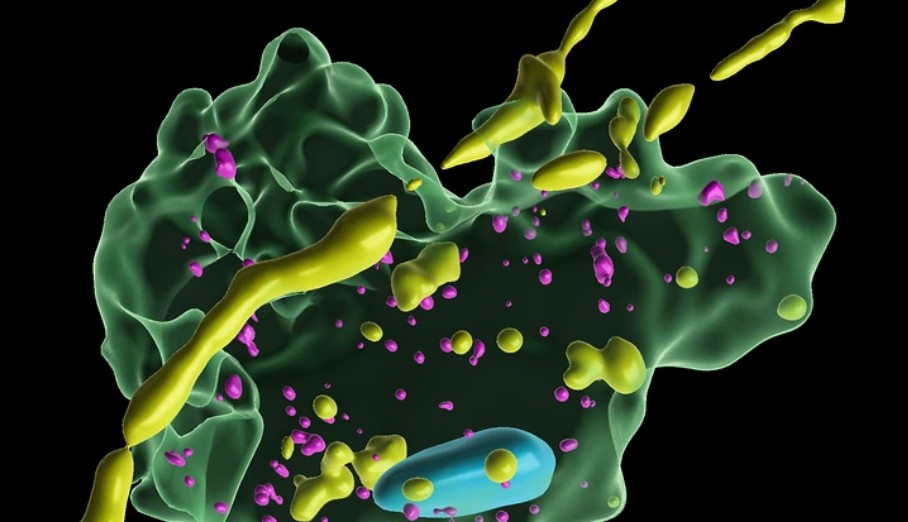
Researchers at the University of Oxford, supported by the National Institute for Health and Care Research Biomedical Research Centre: Oxford and the Medical Research Council (MRC), uncovered a previously unrecognised protective role for microglia, the brain’s resident immune cells, in Parkinson’s disease.
The study, published in Science Translational Medicine, shows that a distinct population of human microglia can selectively remove harmful clumps, or aggregates, of the protein alpha-synuclein from neurons.
Parkinson’s disease, which affects more than 10 million people worldwide, is characterised by the build-up of abnormal clumps of alpha-synuclein within the neurons and the progressive loss of these dopamine-producing nerve cells.
Identifying new potential ways of preventing or removing these clumps could enable new treatments to slow or stop the progression of the disease.
Microglia are the brain’s resident immune cells, acting as its first line of defence and helping to keep the brain healthy. They respond to damage, clear away cellular debris and help shape connections between nerve cells, but, when persistently activated, they can contribute to inflammation and damage to neurons.
The researchers developed human stem cell models to allow human dopamine-producing neurons and microglia to be studied together. They examined how microglia responded when alpha-synuclein aggregates formed inside neurons, either as a consequence of increased alpha-synuclein gene dosage or after exposure to alpha-synuclein fibrils – small thread-like structures found in cells – which act as a ‘template’, encouraging the neuronal protein within the cell to misfold the same way.
The researchers found that microglia were able to reduce the harmful alpha-synuclein aggregates associated with Parkinson’s disease by selectively removing small portions of the neuron through a process known as trogocytosis, where cells ‘nibble’ material from another cell.
This reveals a new mechanism through which microglia can remove harmful material while preserving the overall structure and function of the neuron.
Dr Hung-Ju Chueh, first author of the study, said: “What is striking is the precision of this response. The microglia were not simply engulfing damaged neurons but instead removing parts of the neuron containing aggregated alpha-synuclein, suggesting that, at certain stages of disease, microglia help neurons dispose of potentially harmful material.”
This response was fine-tuned by signals exchanged between the two cell types, helping them to detect changes or reduce their activity. The cytokine IL-10 also acted as a ‘self-regulated brake’, preventing the microglia from damaging healthy tissue.
Using single-cell RNA sequencing, a technique that allowed them to examine the gene profiles of individual cells, the researchers identified a sub-population of activated microglia associated with this beneficial clearance response.
Professor George Tofaris, senior author of the study, said: “Our findings highlight that the immune response in Parkinson’s disease is more nuanced than simply being beneficial or harmful.
“We have identified a population of human microglia that can actively remove pathological alpha-synuclein from neurons. Understanding how to enhance and monitor such beneficial microglial functions, without triggering damaging inflammation, could open up new avenues for developing disease-modifying treatments.”
Professor Tofaris added: “We also found that the protein glycoprotein non-metastatic melanoma protein B (GPNMB) appears to play an important part in this protective process. Genetic variation at the GPNMB locus has previously been associated with Parkinson’s disease through genome-wide association studies, but the functional role of GPNMB in disease has remained unclear.”
The researchers found higher levels of GPNMB in microglia, and it interacted with the abnormal clumps of alpha-synuclein when the microglia were exposed to neurons containing these clumps. Levels of GPNMB were also higher in microglia in the substantia nigra – the area of the brain most affected in Parkinson’s disease – in tissue from individuals with Parkinson’s or early signs of abnormal alpha-synuclein build-up. When the researchers used the gene-editing technique CRISPRi to reduce levels of GPNMB in the microglia, the cells became less effective at clearing alpha-synuclein aggregates from neurons, providing evidence that GPNMB plays an active role in this protective process.