
Associate Professor Sarah Vollam has worked on NIHR Oxford Biomedical Research Centre (BRC) projects since 2009, progressing from research nurse to BRC sub-theme lead in the process and developing her expertise in the use of wearables to enhance patient recovery after critical care. In late 2025, she was recognised as a BRC Senior Research Fellow.
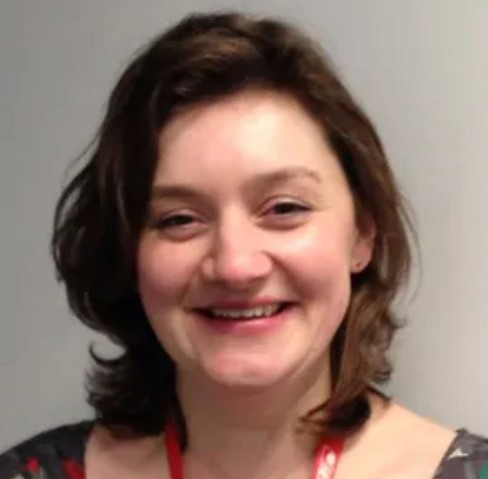
Sarah first joined the Oxford BRC in 2009 as a research nurse, working under Professor Lionel Tarassenko in a theme looking at digital medical technology. During that time, she joined a project led by Professor Peter Watkinson looking at the use of wearables in clinical practice – the start of a thread that Sarah has followed since, through all subsequent iterations of the BRC.
She says the fact that she was a trained nurse was a vital component of this research: “Wearable monitoring – measuring and responding to vital signs – is a nursing intervention and so it’s really important to have that nursing voice there.
“Although I was employed as a research nurse to recruit patients and support staff in implementing the technology, I was actually able to contribute quite a lot to the study conversations, and to think about how to design the study to make it more acceptable for staff and to consider the impact on the patients as well.”
In the early days of her time with the BRC, Sarah split her time between her research nurse role and her clinical role as an intensive care (ICU) nurse. She also won a place on and completed the competitive NIHR-funded Masters in Clinical Research.
“During this time, I started to recognise the challenge for post-ICU patients being discharged to the ward where our study was running, and that sparked my interest in post-ICU care.”
Supported by Professor Watkinson and Professor Duncan Young, Sarah developed a project on post-ICU ward care, and this eventually became her PhD project. Struggling to get a fellowship to do her PhD, the team secured an NIHR Research for Patient Benefit Grant to carry out this project, and the BRC provided further support, funding her PhD fees and research methods training.
Sarah was awarded her PhD in April 2021, after which she was accepted on the BRC’s Next Generation Leaders course, which is aimed at early-to-mid-career researchers and health professionals who have shown great potential to be healthcare research leaders.
“My nursing background means I really understand how we can implement change successfully into practice. It’s really important in terms of how we design our studies, but also how we implement them.”
Now, in the current BRC, Sarah’s twin research interests – wearable monitoring and post-ICU care – have converged in a sub-theme focused on post-ICU wearables which she leads with Professor Watkinson. And given that the theme’s name is Digital Health from Hospital to Home, with all that entails for the NHS priority to move care closer to the community, Sarah is looking at how the technology she has helped to develop might be used in the home setting.
“The two threads of my research career have come together in this BRC. While my strong focus is the hospital setting, there is potential to use the wearable monitoring in hospital for post-ICU patients but also monitor them after they get home for a couple of weeks.
“We must recognise that patients discharged from ICU to the ward have still been critically ill. When they go home, it’s a very difficult transition for them. They’re very anxious. So, we’re hoping that wearables will help to support them at home as well.”
The value of the wearables became apparent during the COVID pandemic. Sarah worked with Professor Watkinson and the BRC team to ensure that the monitoring system they were developing was usable in clinical practice.
“We worked very closely with patients and staff to develop a virtual high-dependency unit (vHDU) system, and then implemented it during COVID on the infectious diseases wards to support their response,” she explains. A quantitative evaluation of the study has just been published.
The use of the vHDU system during COVID was a great success. Nurses welcomed the use of the system, which allowed then to constantly monitor isolated patients. This was valued both for improving patient safety and in managing their very high workloads at a time of great pressure. Whilst remote monitoring systems have long been recognised to have a role in supporting patient safety, this was the first time the impact on nursing workload and prioritisation has been explored.
Sarah feels strongly that her nursing background has prepared her well for the kind of research she is doing – and feels that a nursing perspective is important in any studies that have clinical implications.
“I want to encourage other people to follow the path that I’ve taken. And I want to make it much easier for them if possible. The funding from the BRC has been really important in that.”
“I think it’s really important in terms of how we design our studies, but also how we implement them. My nursing background means I really understand how healthcare works, and how we can implement change successfully into practice.
“If we’re talking about translational research, which is going to make an impact in clinical practice, you absolutely need to understand what that looks like and how change can be implemented. Really understanding that clinical environment and having a different perspective is vital.”
As an example, Sarah highlights a new programme of research she is leading with Professor Watkinson to design an enhanced care pathway for post-ICU patients, which they have been careful to design to work within the current constrained NHS resources.
Sarah is committed to getting more frontline clinicians involved in research and she leads a secondment programme for nurses, midwives and physiotherapists, who can work with the team part-time for a year, undertaking their own research project.
“I want to encourage other people to follow the path that I’ve taken. And I want to make it much easier for them if possible. The funding from the BRC has been really important in that.
“I’ve been really lucky that my contribution has been recognised, and to have been supported all the way through my research career. But I think my progress has been quite slow, because the way I’ve come through has been quite unorthodox. So, I’d like it to be a lot easier for other people and a lot quicker, and for there to be a clearer pathway.”