
The NIHR’s Your Path in Research campaign aims to encourage healthcare professionals to get involved in research or to further their career in research. Colin Forde is a physiotherapist at Oxford University Hospitals’ orthopaedic trauma outpatient department. He is completing a NIHR Doctoral Fellowship which allows him work clinically up to one day per week while completing a PhD.
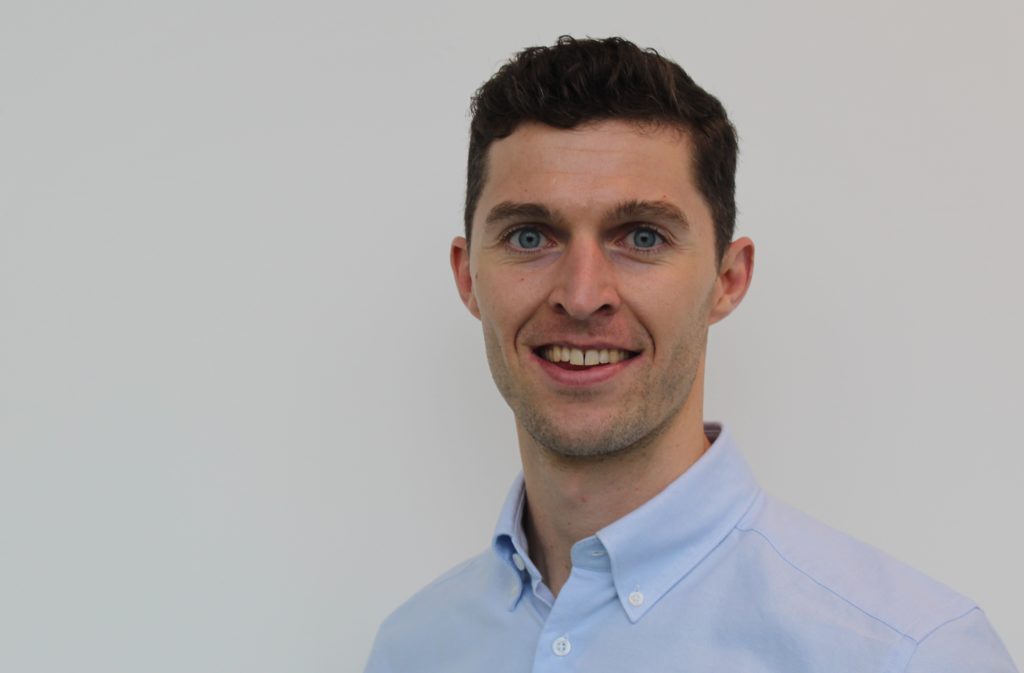
“One of the problems for a lot of clinicians interested in research is they often don’t know where to start. My advice would be to reach out to people who are established researchers in your area of interest. From my experience they are usually more than happy to meet and help out.”
Colin came to Oxford in 2017 with the intention of developing a clinical academic career. He was awarded an NIHR-funded Master of Research (MRes), which he completed part-time over two years while also working clinically. Then, in 2019, he was awarded a preparatory research career fellowship from the Oxford BRC, which he did part-time alongside his clinical work for two years.
These awards paved the way for him to embark on an NIHR doctoral fellowship, which will investigate different types of rehabilitation for people after a recent kneecap dislocation. Clinically, Colin works with patients who have been discharged and come back into the hospital for rehabilitation.
“I’ve been quite fortunate that the research funding has followed sequentially, and for the past four years I’ve managed to combine clinical and research work,” Colin says.
Colin says he initially became interested in research to improve his clinical work: “Initially my aim was to improve my ability to appraise a research paper. I wanted to be able to make an informed decision about whether I should change my clinical practice based on what I had read. At first, when you read a research paper, there will be parts that you don’t understand and it can be frustrating. At that time, what I found difficult was finding people or resources that could help.”
He says his aim now is to contribute to, and develop into a leader of, research which aims to find what physiotherapy treatments are most clinically and cost-effective for patients who have had a musculoskeletal injury. He believes that this has the potential to have a bigger impact on a greater number of patients than if he was just working clinically alone.
“You can potentially have a greater influence on clinical practice and patient outcomes by running clinical trials to see what physiotherapy treatments work and are most cost effective. The results of these trials can then help create guidelines that inform practice on a wider scale – and affect more people than just the one patient you’re seeing in clinic.”
He says as a researcher, having clinical experience is useful: “I’m interested in is designing and evaluating rehabilitation interventions – I think clinical experience can help you identify where the important gaps in evidence are, if rehabilitation interventions will work well in a clinical context, but also what’s feasible from a research perspective for clinicians to do.
“The flip side is that, for clinicians, research experience can improve their ability to appraise research and understand whether you should change your practice as a result of what you’ve read,” he explains.
Colin’s MRes consisted of two ambitious projects: a systematic review about leg strength recovery after a kneecap dislocation; and a smaller study looking at the acceptability of an intense rehabilitation programme.
The BRC preparatory fellowship gave him the opportunity to finish analysing the data from these MRes projects, write them up and submit them to academic journals. One has been accepted and published, the other is expected to be published soon.
The preparatory fellowship also gave him the protected time and funding needed to complete training courses, develop a supervisory team with the necessary clinical and methodological expertise, and work with clinicians and members of the public to help prepare a competitive doctoral fellowship application.
Colin’s physiotherapy department is very supportive of research. They work closely with the Oxford trauma and emergency care research group who regularly conduct physiotherapy trials, which Colin is involved in clinically.
“I think the physiotherapy department can see the benefits of my research, which I bring into my clinical practice. I coordinated the department’s training programme, including a journal club, and I help to supervise some of the junior members of the team with their service development projects,” he says.
And does Colin have advice for other clinical staff interested in getting into research? “One of the problems for a lot of cliniciansinterested in research is they often don’t know where to start. My advice would be to reach out to people who are established researchers in your area of interest. From my experience they are usually more than happy to meet and help out. They’ll also be able to signpost them to other researchers and people who might also be able to help.
“But definitely be proactive. There are more and more physiotherapists being awarded NIHR fellowships which hopefully will make it much easier for people following them,” he says.