
A conference of Oxford University Hospitals (OUH) health and care professionals (HCPs) has highlighted the growing role nurses, midwives, allied professionals, pharmacists, healthcare scientists and psychologists are playing in research carried out at the Trust.
The conference also saw the launch of a new forum for HCPs to showcase their research and support their career development.
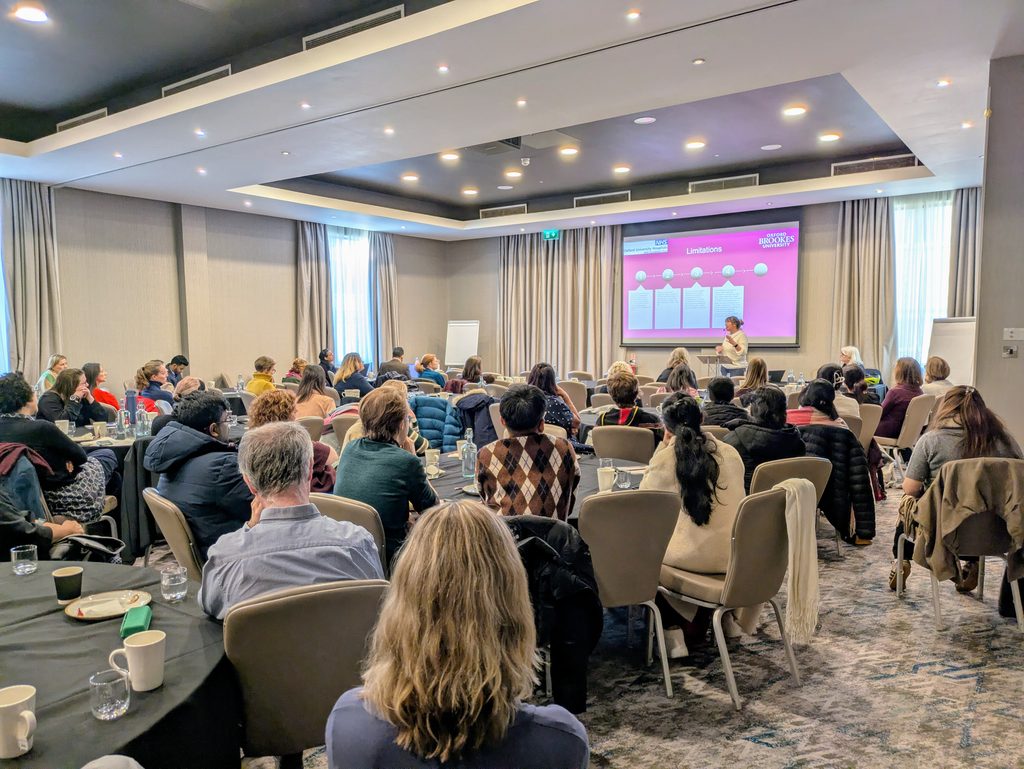
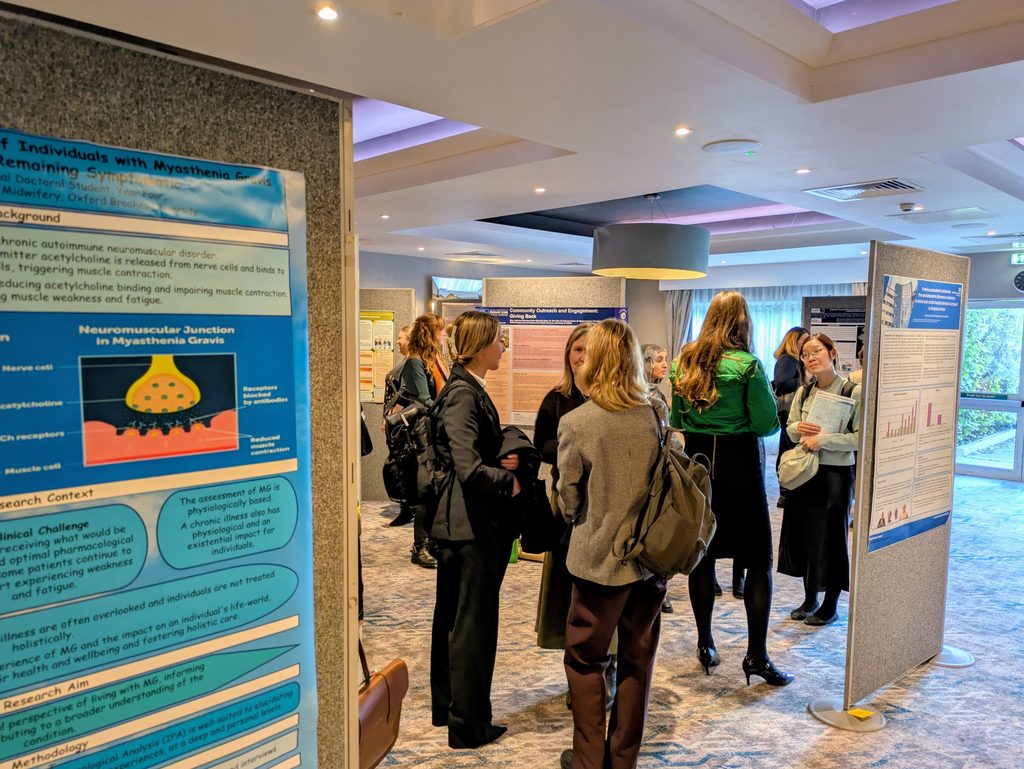
The third annual Celebrating Health and Care Professionals in Research Conference, which is sponsored by the NIHR Biomedical Research Centre: Oxford, featured 38 oral presentations and 26 posters by HCP clinicians about their work and how they are enhancing the quality of care, improving patient outcomes or transforming processes at OUH.
Those attending the event heard talks and debates about how the research capability of the OUH workforce is being strengthened through training, mentorship and other career development initiatives; about how to balance clinical and academic work; post-doctoral career progression; and how to access funding.
Professor Helen Walthall, OUH Director of Nursing, Midwifery and Allied Health Professionals (NMAHP) Research and Innovation, said: “The aim of this conference is to celebrate the work of under-represented groups that are doing excellent research in the trust and sharing research knowledge across our professions.
“It makes me feel very proud seeing so many people here showcasing a broad range of research – all aimed at furthering our knowledge or delivering better services – and always with the patient at the centre. We can see that not only is research culture at OUH vibrant and evolving, but also that people from all professions regard research as a key component of delivering care. We want to see that research culture truly embedded in clinical teams across the trust.”
There are 8,000 registered health and care professionals at OUH, but just 0.1% of them are clinical academics, compared to more than six per cent of medical colleagues. The conference was a way of discussing how to increase career progression opportunities for these professions, as well as showcasing what they can do and how they can influence that change.
A watershed moment for HCP research at OUH was the appointment of four Divisional NMAHP Research Leads, who have helped to build research capacity and capability through training, mentorship and supporting funding applications. Recent analysis showed that for every pound spent on these divisional lead roles, OUH got some £17 back in research funding. The divisional posts are complemented by a Head of NMAHP Clinical Research Delivery, whose role is to develop the infrastructure to support clinical research delivery teams.
It is hoped that an important vehicle for continuing that momentum is CEDaR (Clinical Excellence, Development and Research for Health and Care Professionals), a new collaborative forum for HCPs at OUH with an interest in research, which was launched at the conference.
The group includes HCPs from a range of disciplines, including nurses, midwives, physiotherapists, pharmacists, healthcare scientists and psychologists, who are supported by healthcare librarians.
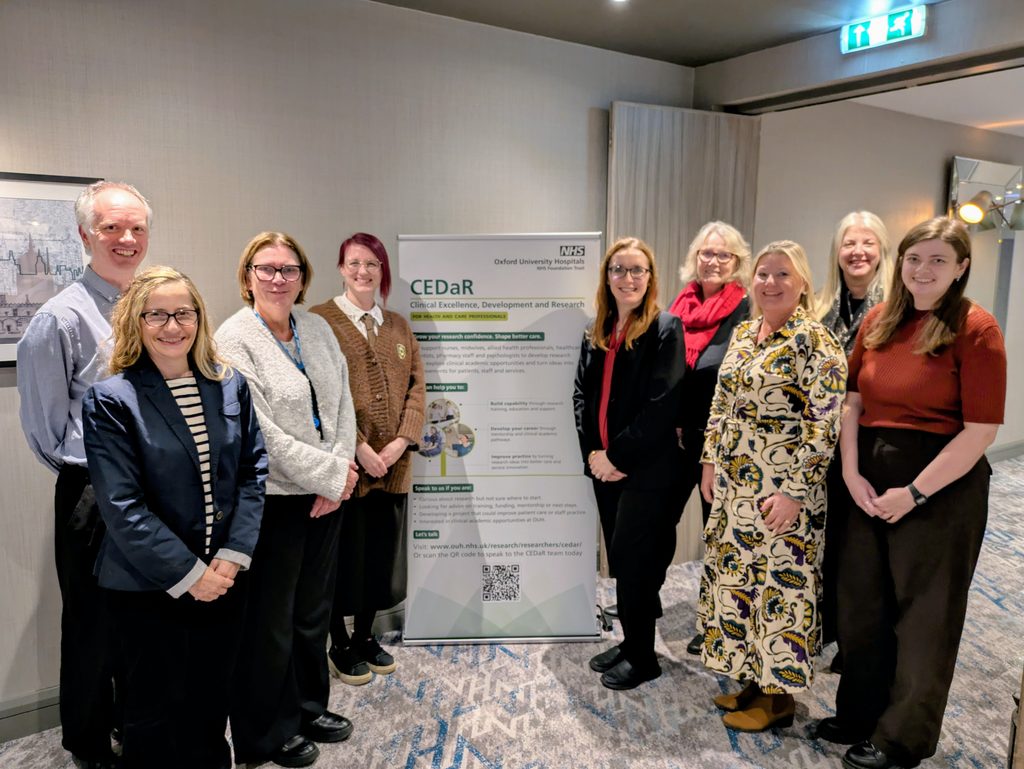
CEDaR has both an internal and external focus – internally, to provide a forum for HCPs involved in research and a repository where they can find resources to support them on their career pathway; and externally to demonstrate the research carried out by these professions at OUH to the outside world, whether industry or colleagues in other trusts and universities who might want to collaborate.
Dr Louise Strickland, Divisional Lead for NMAHP Research and Innovation in SuWOn Division, said: “The aim of CEDaR is to bring together health and care professionals across OUH to strengthen research, innovation, professional development and evidence-based practice.
“Our ambition is to help create an environment where health and care professionals – wherever they are on their research journey – can engage with research, develop their skills and careers, connect with others and undertake research that makes a difference to patients, staff and services.”
She said that the new forum was open to all HCPs: “Whether you are curious about research and wondering where to start, looking for development opportunities, already research-active, or interested in collaborating with colleagues across OUH, we want CEDaR to provide a space to connect, learn and develop.”
A website has been created to showcase HCP-led research and to provide useful information for HCPs on everything from use of patient data to training opportunities.
The conference opened with keynote talks by Dr Julie Stebbins and Dr Ravi Purohit, two of the people to be awarded the new Academic Clinical Lectureships earlier this year. These roles were created, again with BRC Oxford support, to provide a post-doctoral pathway for HCPs; Dr Stebbins, a Clinical Scientist in the Oxford Gait Laboratory, and Dr Purohit, an Orthoptist in the Oxford Craniofacial Unit, spoke to the conference about their research journey and how they have overcome the challenges along the way.
The conference also heard a talk from Dr Sheera Sutherland, Divisional Lead for NMAHP Research and Innovation in MRC Division, and Dr Mark Williams, Associate Professor in Rehabilitation at OUH and Oxford Brookes University, about the SORT (Self-assessment of organisational readiness) process they have been leading to evaluate how ready OUH is to support HCPs engaged in research.
SORT, developed by NHS England for nurses, midwives and allied health professionals interested in developing research capacity and capability, provides a framework to assess the maturity and the scale of the research support that is provided by the Trust. This will produce a baseline from which change can be measured.
Above all, the conference was a unique networking event, and one, according to Dr Clair Merriman, Divisional Lead for NMAHP Research and Innovation in NOTSSCaN Division and lead organiser of the conference, that had already generated useful outcomes: “This has been an amazing opportunity for HCPs from different parts of the Trust to come together and learn how their peers in other disciplines have overcome obstacles or found creative solutions to advance their research. Already clinicians from completely different fields have connected and realised they could work together to improve the care of a complex patient.”