
Most children with a severely broken wrist can be treated without surgery, according to a major UK trial led by researchers at the University of Oxford.
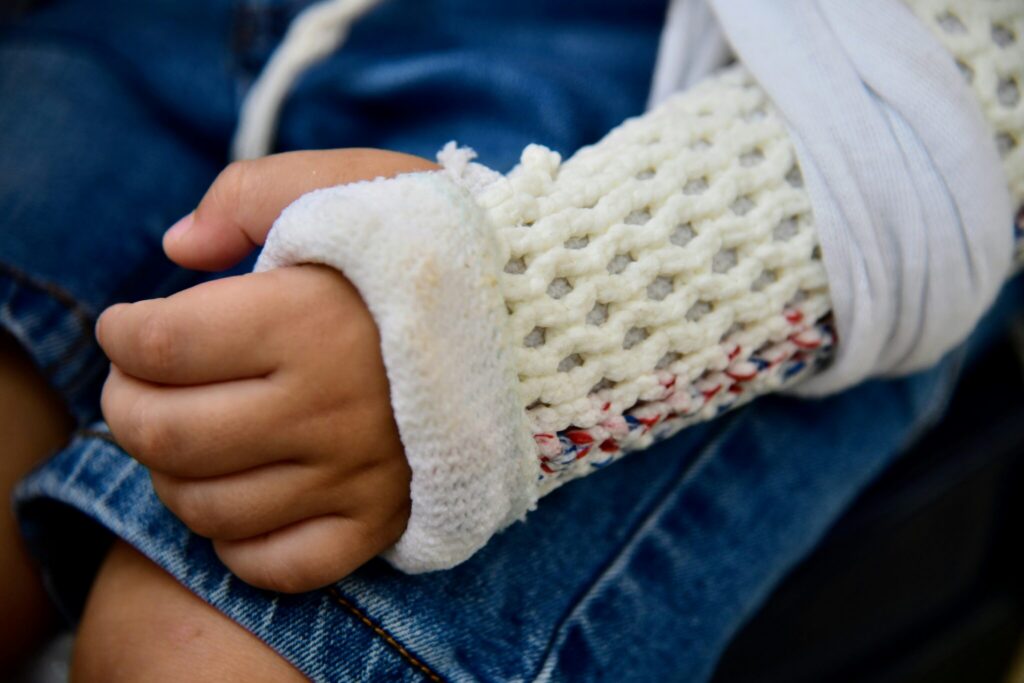
The findings of the CRAFFT trial, which was funded by the National Institute for Health and Care Research (NIHR) and supported by the NIHR Biomedical Research Centre: Oxford, suggest that a non-surgical, cast-first approach delivers similar long-term recovery while reducing the risks associated with surgery and costs.
Broken wrists are among the most common injuries in children, accounting for about half of children’s fractures. Severely displaced distal radial fractures, where the bones move out of place, are often routinely treated with surgery.
However – unlike adults – children have a remarkable ability to straighten broken bones, in a process called remodelling. Researchers questioned whether a plaster cast would achieve the same long-term result without exposing children to the risks of an operation.
Professor Matt Costa, senior author and Professor of Orthopaedics Trauma Surgery at the University of Oxford’s Kadoorie Institute and Lead for the Oxford BRC’s Musculoskeletal Theme, said: “These fractures can look very severe on an X-ray, which has traditionally led to surgery to straighten the bone. But because children’s bones are still growing, they have a remarkable capacity to heal. Until now, there has been limited high-quality evidence on whether surgery was always necessary.”
The CRAFFT (Children’s Radius Acute Fracture Fixation Trial) trial recruited 750 children aged between four and 10 years from 49 hospitals across the UK. Participants were randomly assigned to receive either surgical fixation or treatment with a plaster cast.
Patients were measured at regular intervals against a set of criteria. At three months, children who had surgery reported slightly better arm function, but the difference between groups was very small. By six and 12 months, there was no difference in recovery, suggesting that early advantages with surgery do not persist.
There were complications following surgery, including infections, scarring and nerve irritation. Non-surgical treatment, which avoids anaesthesia and operative intervention, was shown to reduce NHS costs by around £1,600 per patient on average.
The trial was designed with input from families, who helped define what level of improvement would be meaningful enough to warrant surgery. The observed difference between treatments fell below this threshold.
Professor Dan Perry, NIHR Research Professor and Children’s Orthopaedic Surgeon at Alder Hey Children’s Hospital and the University of Liverpool, and lead author, said: “It is astonishing that children have the ability to grow broken bones straight again – even if they initially appear a little wonky – it’s a superpower that is unique to children. Putting these results into practice could reduce the number of children exposed to the risks of anaesthesia and surgery, and ease pressure on healthcare services without compromising recovery.”
The results, published in The Lancet, support wider adoption of a cast-first approach for most children with these injuries.