
The NIHR Biomedical Research Centre: Oxford has held its first Academic Career Development Symposium, attended by a wide range of researchers who have benefitted from BRC support.
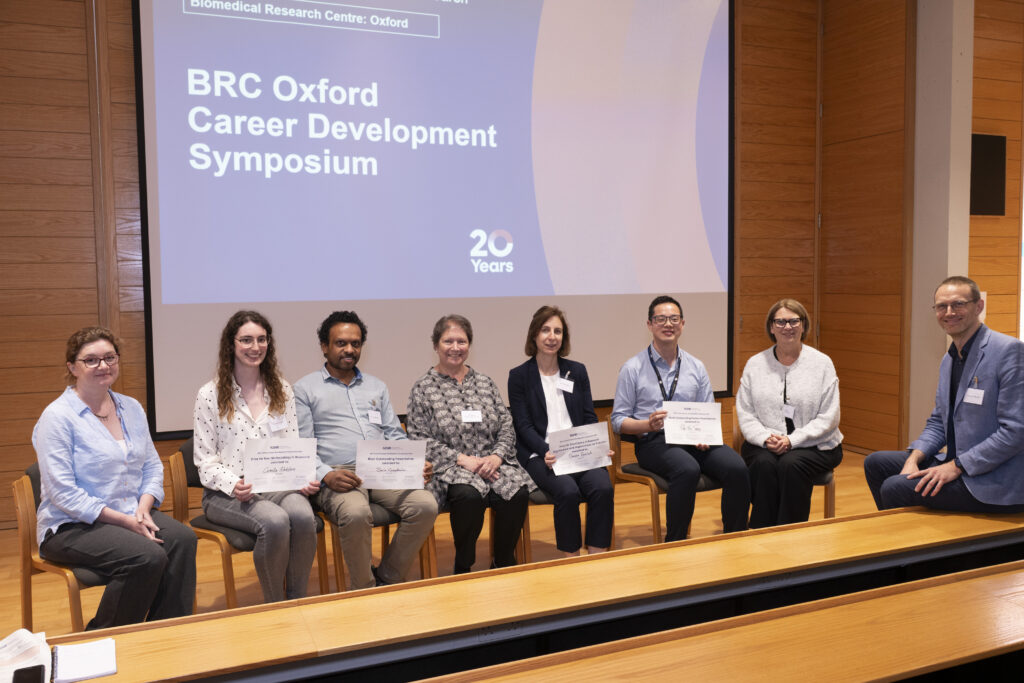
The event, held at St Anne’s College in Oxford, featured research presentations, inspiring career talks, and poster displays by researchers – many of them early-career researchers – who had received BRC awards, as well as being an opportunity to network with other researchers from across the BRC and explore potential new collaborations.
Professor Sarah Rowland-Jones, NIHR BRC: Oxford Academic Career Development Lead, said: “We thought it would be a fantastic opportunity for people researching in different parts of the BRC to come together, talk about their work and celebrate their achievements.
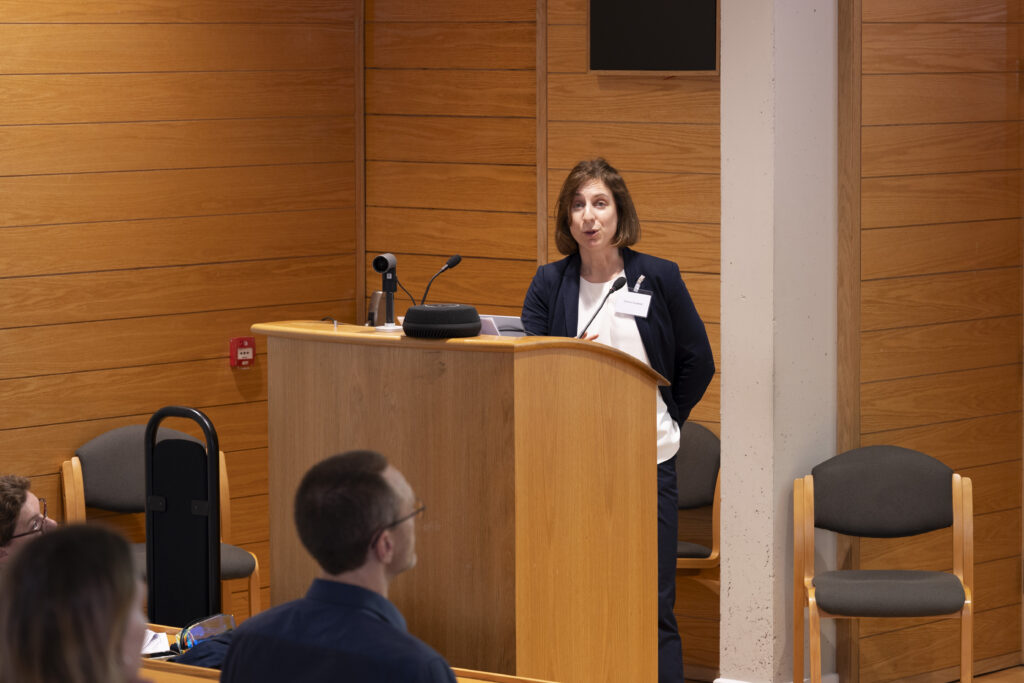
“We were very keen to bring people from different backgrounds together, to encourage them to make new contacts and hopefully foster new ideas. Many researchers only go to events that are very specific to their work. Today they have the chance to see that others are conducting research in a different way – or are doing complementary projects or have complementary skills.”
Those attending the symposium included current and past recipients of BRC Oxford career development awards, such as internships, pre-doctoral, doctoral and post-doctoral fellowships, as well as NIHR Academy Members and trainees supported within BRC themes.
Among the keynote speakers was Professor Sarah Vollam, who spoke about her career progression. Having started with the BRC as a research nurse in 2009, she is now a sub-theme lead in the current BRC. She was recently awarded a BRC Senior Research Fellowship and named an Associate Professor.
One of the researchers who presented their work to the gathering was Helen Knott, a community neurophysiotherapist in the BRC’s Preventative Neurology Theme.
Her research involved taking treadmill training for people with Parkinson’s disease into the local community to assess their gait speed. Her research, which was expanded with BRC funding, resulted in improved speed and balance for the participants, as well as improved quality of life. Her approach is now part of routine clinical practise for her team and is being explored by other services.
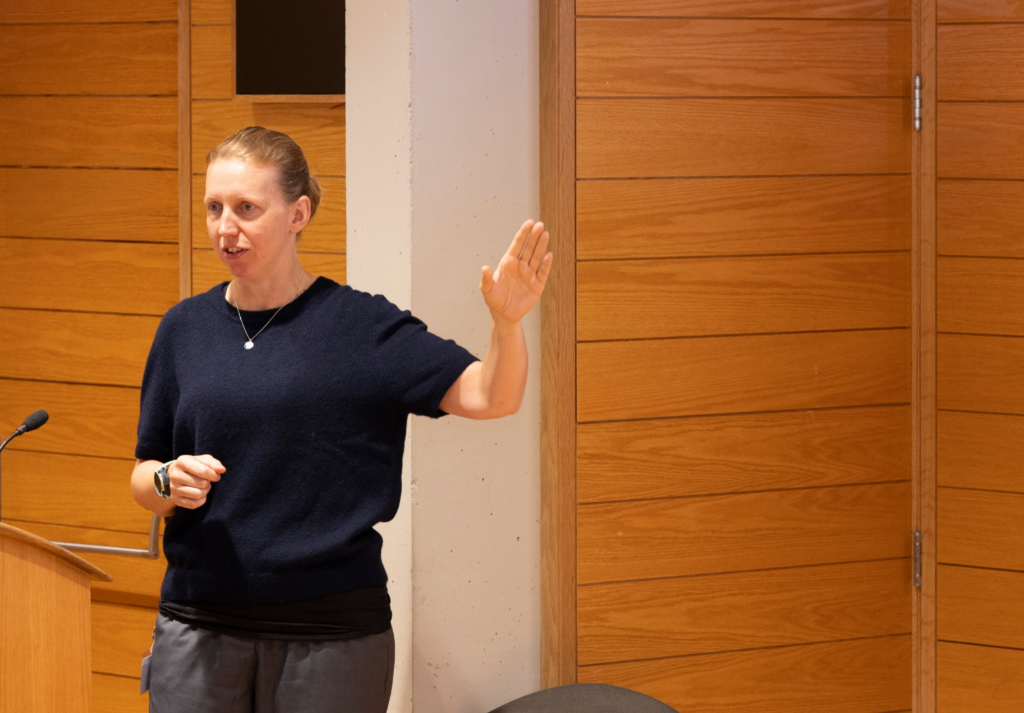
Helen said: “I was excited to share my work. It’s been really fascinating to hear about all the other projects and how people are getting different elements of funding and what they’ve done with it. It’s been nice to meet a diverse group of professionals, see how their work overlaps and hear about some of their challenges and successes, which gives you ideas for the future.”
That view was echoed by another speaker – Joanna Snowball, a dietitian in the adult cystic fibrosis (CF) service at Oxford University Hospitals, who is currently doing an NIHR Doctoral Fellowship, having previously completed a BRC internship and preparatory fellowship and an NIHR pre-doctoral fellowship. She is breaking new ground as there is little or no evidence in her area of research – how to support people with CF who are experiencing rapid weight-gain as a result of new medications.
Joanna said: “Every time I come to one of these events, I learn about something that I had absolutely no idea even existed, let alone had an understanding of, which is amazing. Five years ago, I didn’t even know what BRC was. And now I’ve been funded by it and then I’ve taken that funding on. And I really recognise that it was a privilege to receive that initial funding, and I wanted to do something with it.
“It’s been a lot of work, but I’m glad I’ve done it. And now, to come here and present to people that supported me feels quite rewarding.”
As well as those giving oral presentations at the symposium, there was also a display of research posters. One of those showing the findings of their study was Christopher Mwema, a Medical Statistician in the Oxford Clinical Trials Research Unit and an NIHR Pre-doctoral Fellow.
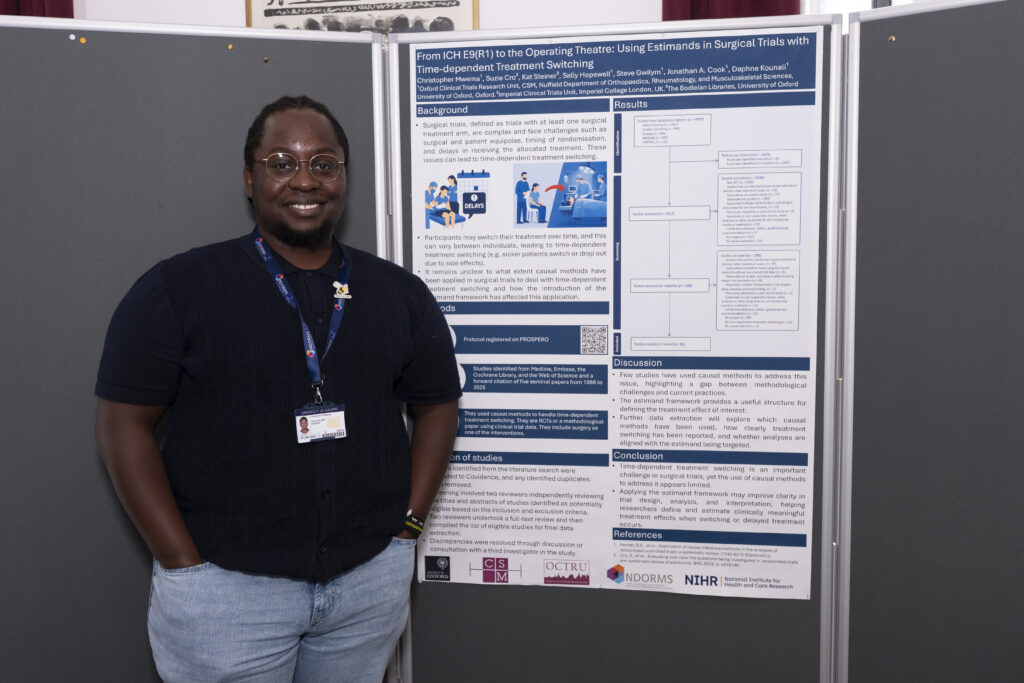
Christopher’s study analysed which methods have been used to address time-dependent treatment switching in surgical trials. He said: “It’s been a good experience. This is the first poster that I’ve ever done, and I’ve received very positive comments. People have been very interested, and they’ve asked very good questions and mentioned that is a very important issue that needs to be addressed.”
At the end of the symposium, prizes were given for the best presentations. The winners were:
- Bevin Gangadharan – Outstanding Presentation
- Joanna Snowball – Excellence in Research Significance and Implications for Practice
- Dr Camilla Gladstone – Best Methodology in Research
- Pok-Tin Tang – Outstanding Poster Presentation
Reflecting on the event, Professor Rowland-Jones added: “Training and academic career development is crucial to our BRC – and to the wider NIHR – and it’s important that we ensure that there are opportunities across all the different health professions. Today we have had a diverse mix of researchers – basic scientists, medical doctors, nurses and allied health professionals – presenting their work, and I think that is representative of how the NHS should work – in research as well as clinically.”